• Skip to primary navigation
  • Skip to main content

Sedona City Councilmember Pete Furman

  • Home
  • About Pete
    • Meet Pete
    • Pete’s Priorities
    • Pete’s Perspectives
  • In the News
  • City Meetings
    • Upcoming Sedona City Meetings
    • Sedona City Meeting Summaries
  • Contact Pete
  • Show Search
Hide Search

In the News

Annexation process moves ahead with 6-1 vote

Pete Furman · January 29, 2025 ·

Annexation process moves ahead with 6-1 vote – Sedona Red Rock News

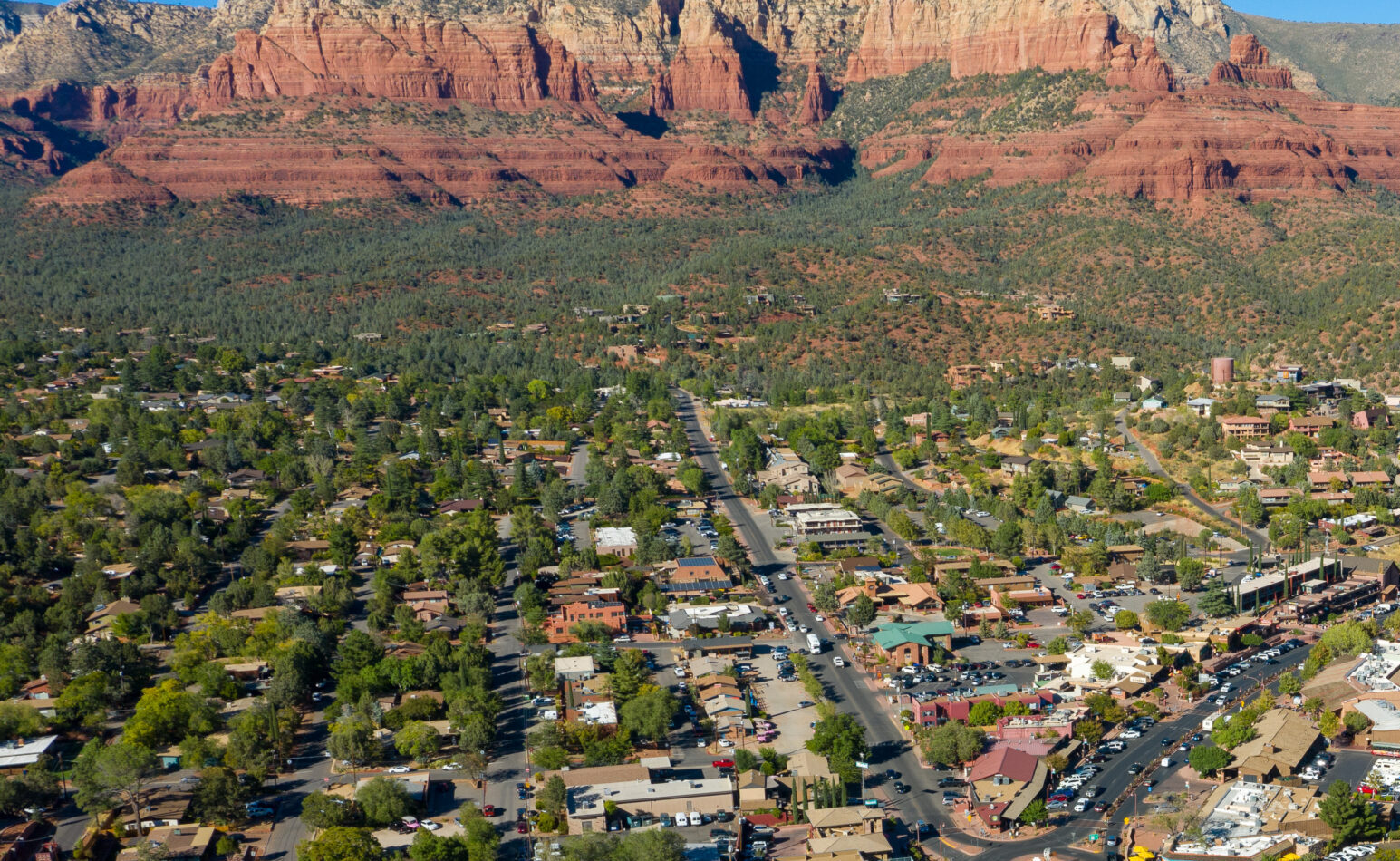
The city of Sedona is moving ahead with plans to annex 3,422 acres outside the city limits in order to bring the city’s wastewater plant and vacant land at the Dells within city boundaries. Photo by David Jolkovski/Larson Newspapers.

The Sedona City Council voted 6-1 to proceed with annexing 3,422 acres of U.S. Forest Service land and cityowned property within the county at a public hearing on Tuesday, Jan. 14.

City Attorney Kurt Christianson confirmed to council that no property within the proposed annexation area is privately owned and that the three property owners within the annexation area, the city of Sedona, the Arizona Public Service electric utility and the Coconino National Forest, hold only property with no assessed value and therefore are not required to approve or vote on the annexation.

Christianson also said that three entities have leases or other rights associated with assessed property values within the annexation area: APS, EDP Renewables, which operates the solar panels at the city’s sewer plant, and Lumen Technologies.

“Of the three, we’ll need two of the three to sign in support,” Christianson said. “A majority of the property owners and a majority of the properties’ assessed value. EDP Renewables and APS have already indicated they have no issues with the annexation and would support it.”

“There will be a policing impact on city services but otherwise no impact on city services,” Christianson said, observing that the Sedona Police Department currently receives “hardly any calls for service” to the area, although the sewer plant is already under SPD jurisdiction pursuant to the city’s agreement with Yavapai County.

If annexed, the land within the annexation area will be automatically zoned single-family residential. City Manager Anette Spickard said that transfer of ownership of that land from the USFS to a private owner would be “technically possible” but “highly unlikely.”

“The Forest has a very strict policy and criteria that govern how any of the Forest land in this district could go out of Forest ownership,” Spickard said. “It has to either have an act of Congress request or they have to be eligible under some very specific federal acts to ask for an exchange. Even if a proposal came in out of one of those three things, they have to meet substantial criteria … and the city would have a say in that, because it has to meet a community need.”

Three residents spoke during the public hearing, only one of whom expressed a definite opinion on the proposal.

“I’m wondering if the city would consider placing a deed restriction on the entire property to prevent commercial development and residential development forever,” Oak Creek Canyon resident Rick Black said. “Placing a deed restriction on it tells the world, tells everybody, tells the city and its citizens that the property cannot be developed.”

Nena Barlow, owner of the Barlow Adventures Jeep tour company, asked that city staff consider devising a better way for off-highway vehicles to cross the highway as part of the planned redesign of the State Route 89A intersection at the Sedona Wastewater Reclamation Facility, which is within the annexation area.

“I’d like to focus more on the reasons why you’re pursuing this,” said Cliff Hamilton, a former Sedona vice mayor. “You’re concerned that Cottonwood may be trying to leapfrog annex more in our direction … the other one being, of course, this issue with Yavapai County having to do with building the bus barn out there at the wastewater plant. Starting with the first one, looking at that particular area, any sort of public infrastructure that you might want to think about in terms of future development, I would say personally is never going to happen … there were really none of them that really were suitable or appropriate for that area … Any kind of public infrastructure development out there was something that [Arizona Department of Transportation] told us they would not tolerate … they would not grant the city access to the road for that sort of thing.

“If you’re looking at this issue with Yavapai County and want to sort of get around them to build this bus facility out there, that seems a pretty thin reason to me,” Hamilton continued. “This looks more to me like trying to swat a fly with a sledgehammer.”

“While it changes jurisdictional boundaries, it doesn’t change ownership of the land,” Christianson clarified following the hearing. “There’s no possibility for the city to place a deed restriction on the Coconino National Forest land. It doesn’t own it.”

With regard to the city’s property within the annexation area, “if the city places some deed restriction on it, the city could just take it off,” Christianson added.

“One council can’t constrain a future council,” Councilman Brian Fultz said. “It kind of feels like we would be doing that by putting a conservation easement on that property, so I’m not really in favor of that … I don’t see a reason why we would want to preclude an opportunity to develop in future.”

“If development in the future … occurs on the Dells, and if that includes housing, then those people have a right to have a voice in Sedona,” Councilwoman Melissa Dunn said. “Unless we do this annexation, they will have no voice, because they will be living in the [Yavapai] County.”

“If there is to be residential development, then the people who live there should have a say in their government because it would be city-owned land,” Vice Mayor Holli Ploog said.

“Whether or not this property is annexed has no effect on whether there’s going to be a land swap,” Councilman Derek Pfaff said. “It doesn’t make it any more or less likely that there could be a land swap. If at some point in the future the standards for a land swap are loosened, and a land swap does take place, I’d rather we have jurisdiction over it than someone else.”

“I’m supporting this annexation with a preservation mindset for this area,” Councilwoman Kathy Kinsella said. “There’s land to still be built on in Sedona.”

Mayor Scott Jablow said that Yavapai County’s zoning guidelines are less “restrictive” than those of Sedona and commented that if “we’re going to do any kind of project, 20 years, 30 years from now, hopefully I won’t see that,” but should a future council allow development of the Dells, he also wanted potential future voters to be located within the city.

Councilman Pete Furman continued to protest the annexation proposal.

“This to me looks like a rushed — what I will call a major change in public policy in Sedona,” Furman said. “It was a very unheralded element in our Community Plan that changed for the first time in years and years and years and years without really a public debate. I would bet that 99% of our population does not know that public policy was changed by the Community Plan. I remain puzzled by the need and the timing … I’m also worried about unknown decisions by future council.”

“Leave a good thing alone,” Furman concluded.

Following a motion by Ploog to proceed with the annexation process, the council voted 6-1 in favor, with Furman as the sole dissenter.

A date has not been set for staff to bring the signed petition back to council for approval.

Council rejects phased fees for single large increase

Pete Furman · December 29, 2024 ·

Council rejects phased fees for single large increase – Sedona Red Rock News

Sedona’s current and proposed development impact fees compared to those of other regional municipalities. Table courtesy city of Sedona.

After weeks of discussion over proposed increases to Sedona’s development impact fees, which would double them by an estimated 106% to 139%, and statements by multiple members of the Sedona City Council that the proposed fees were too high, the council voted 4-3 on Dec. 10 to direct staff to proceed with implementing the full fees as proposed by city staff and their consultant.

Council members had previously requested additional information on how the proposed fees could be implemented over an extended period on a phased schedule, and City Manager Anette Spickard presented the council with three options to phase in the fees over periods of three or four years, in each case beginning at 50% of the full amount before rising to 75% and 100% at the next two intervals, with two years at either 50% or 75%.

With regard to the proposed phase-in of the increased fees, “are we allowed to slam the brakes on this after year one?” Councilman Derek Pfaff asked.

Spickard replied in the affirmative, noting that “future councils can decide in those out years not to apply that amount.”

“I would just go with it as it is,” Councilwoman Melissa Dunn said of the proposed fees, referring to “huge impact” and “small money.”

“They’re not that much money, we heard last time,” Dunn said.

“Ditto what Councilor Dunn just said,” Councilman Brian Fultz said.

“I don’t support increasing the fees. I think it has a very negative impact,” Vice Mayor Holli Ploog said. “It’s a little bit of money, the general fund can pay for it. Our fees are beyond anywhere else in the entire Verde Valley.”

“People don’t want more development in Sedona,” Pfaff said. “If we discourage other kinds of development [than workforce housing], so what? … I don’t have any problem discouraging development.”

Pfaff added that while he supported raising the fees, he would prefer to do it over an extended period rather than all at once. “This doesn’t incentivize what we want incentivized and decentivize [sic] what we want decentivized [sic],” Councilwoman Kathy Kinsella said, expressing her support for keeping the current fee levels. “That’s the only way that I can sleep at night on this one, by not changing it on what I believe is a faulty formula.”

“I don’t agree that our fees are out of alignment with other cities and towns,” Mayor Scott Jablow said. “I don’t like the idea to raise these fees. I think it is counterproductive to housing … it’s really a tossup for me, I have no idea.”

“Which king is it that wanted to split the baby?” Kinsella asked.

The council then split as Fultz proposed implementation of the full fees, seconded by Dunn. The motion was approved 4-3, with Fultz, Dunn, Jablow and Councilman Pete Furman in favor, and Kinsella, Pfaff and Ploog in opposition.

The fees will be subject to one more public hearing for final approval on Tuesday, Jan. 14.

Creekwalk revived at council planning retreat

Pete Furman · December 27, 2024 ·

Creekwalk revived at council planning retreat – Sedona Red Rock News

A creekwalk along Oak Creek was first proposed in 1993. The new draft plan would have the route run from Art Barn Road, cross Oak Creek twice, and extend past Tlaquepaque. Map courtesy city of Sedona.

Just in time for Christmas, the Sedona City Council considered giving residents a creekwalk.

Deputy City Manager Andy Dickey started the discussion during the council’s Dec. 11 priority retreat session by telling council that the Arizona Department of Transportation had approached the city about selling the city two parcels of land that it currently owns adjacent to State Route 179 and Sombart Lane.

“We’re looking into those at the moment,” Dickey said. “I’ve reached out to a local consultant and just completed a Phase I environmental analysis, and that showed no issues.”

In addition to the city paying ADOT the amount that it originally paid for the parcels, Dickey said, “there would be a deed restriction that requires that the city’s use of them be restricted only to transportation use. I have verified with them that this could be for trails, for potentially some kind of creek park, in this little over-three-acre parcel … As far as the creekwalk goes, this would be a key piece to that walkway. It’s just south of where we just completed the [pedestrian] underpass … the idea would be that in the future a creekwalk could connect between this parcel and 179’s underpass.”

“The idea’s not to create a Slide Rock version 2.0 here, but to restrict use to the area that we want it, and work through our legal department on how we establish restricted zones … and keep folks within the walking path,” Dickey added, a condition that Councilwoman Kathy Kinsella described as “passive recreation only.”

At the other end, Dickey noted that the creekwalk could connect to the new Ambiente: Creekside development off Art Barn Road in Uptown.

“I’ve been told that this connection is something the developer is looking into with the [U.S.] Forest [Service],” Dickey said. “This is a brand-new concept that we’re just putting out at this point.”

Staff is currently looking at moving ahead with creekwalk planning in the coming fiscal year.

“It’s really tremendously exciting to see that,” Councilman Pete Furman said. “We really are going to have think through the management of people … maybe there’s a transit element of access.”

“This is part of this bigger conversation around how do we get around in our city and how do we protect the pieces of our city, including neighborhoods, as people are moving through them,” Councilwoman Melissa Dunn said.

According to city staff’s draft plan, the tentative creekwalk route would run south along the west bank of Oak Creek from Ambiente past the Art Barn, the Arroyo Roble Resort and L’Auberge de Sedona before crossing the creek via a footbridge to the east bank at the in-development Oak Creek Heritage Lodge, traversing the island in the creek across from the Center for the New Age and recrossing the creek again to follow the west bank past Tlaquepaque down to the ADOT parcels.

Historical Background

A system of walking paths along and foot bridges across Oak Creek were proposed as part of the Uptown character area plan in 1993.

In 2007, the city considered an arrangement with Arizona State Parks that would have allowed it to fulfill its obligations under the Sedona Heritage Cultural Park Grant, which provided the city with a grant of $650,000 to be used for the development of the Sedona Cultural Park, by allocating an equivalent value of investment toward the creekwalk project. The city and L’Auberge also discussed an easement for a potential creekwalk during L’Auberge’s rezoning for renovations in 2008.

R.D. Olson Development, developers of the planned Oak Creek Heritage Lodge off Schnebly Hill Road, agreed on Dec. 10 to make a contribution of $550,000 toward the construction of the creekwalk, which will become due when the city funds the remainder of the project, the cost of which was estimated at $5.5 million at the time, up from $1.6 million in November 2014.

Council settles with RD Olson to end Heritage Lodge suit

Pete Furman · December 25, 2024 ·

Council settles with RD Olson to end Heritage Lodge suit – Sedona Red Rock News

The proposed arrival building for the planned Oak Creek Heritage Lodge off Schnebly Hill Road. Photo courtesy RD Olson Development.

The Sedona City Council voted 5-2 on Tuesday, Dec. 10, to reverse its June 25 reversal of the Planning and Zoning Commission’s unanimous approval of Oak Creek Heritage Lodge hotel project on the grounds that it did not satisfy environmental and planning requirements.

The council reversed itself in order to enter into a settlement agreement with property owner RD Olson Development, which sued the city in Yavapai County Superior Court on July 24 for “effectuating [sic] a zoning decision in the context of an administrative appeal,” abusing its discretion and acting in an arbitrary and capricious manner by overturning the commission’s approval.

Prior to the council’s acceptance of the settlement agreement, oral arguments in the suit had been scheduled for Wednesday, Jan. 15.

Under the terms of the agreement, RD Olson will break up the southern cluster of buildings into a larger number of smaller buildings, reduce the extent to which balconies overhang the floodway on the property, increase the number of parking spaces from 90 to 118, set limits on the number of event attendees and non-guest customers and contribute $550,000 toward the city’s proposed creekwalk or pedestrian bridge adjoining the resort property.

The contribution will not be due until the city fully funds the creekwalk plan, the cost of which is estimated by city staff as being $5.5 million.

The City Council’s renewed interest in a creekwalk will be covered in the Dec. 25 edition of the Sedona Red Rock News.

In exchange for these concessions, the council agreed to reverse its previous finding and approve RD Olson’s development review, allowing the project to proceed, and to exempt the Heritage Lodge from the increased development fees that the council voted to approve later during the meeting.

The development fee increase will also be covered in the Dec. 25 edition of the NEWS.

“We’ve received a number of comments alleging that the city does not have authority to change course at this point and that it just has to accept the outcome of the litigation,” City Attorney Kurt Christianson told the council. “The City Council has both inherent authority and express authority to settle this litigation. City Council, just like all litigants, has authority to enter into settlement agreements.”

“No new traffic study was done,” Christianson said in response to a question from Councilman Brian Fultz. “It’s anticipated to be the same, or slightly less with the restrictions on the guests.”

Public Comment

Members of the public came down 10- to-4 in support of the settlement agreement during the hearing.

“It disturbs me that we have to have an attorney and an attorney and an attorney to present developments,” neighbor Jake Weber said, and recommended having either more lawyers or fewer lawyers on the council. “This will help the budget. This is a long-term tourist that stays with us.”

“I ask that you consider this to be a future classic addition to Sedona, because it will be one that we can all be very proud of,” Fred Shinn said.

“I am totally in support of this stellar development,” neighbor Terri Frankel said. “Planning and Zoning got it right … Robert Olson and his team have since polished the diamond.”

“The Olson development is a quality development,” neighbor Mary Kyllo said. “His development will be an asset to my neighborhood.”

“I am absolutely, completely and totally opposed to the scale of Mr. Oslon’s resort,” neighbor Miriam Wackerly said, and predicted that the creekwalk would have “horrible negative effects.”

“You want to open up an area to, what, we have 6, 8, 10 million visitors per year?” Wackerly asked. According to the city’s latest tourism study, the city received an estimated 3,160,322 visits in 2022 and averages 1.39 million unique visitors.

“They’re going to be walking basically in our backyard … It’ll end up a toilet because people will go in Oak Creek. If they have that access, they will … It’s insanity … during COVID, the ducks left, the eagles left, the animals left,” Wackerly said.

“This is a new application. The developer doesn’t want to go through the process again. He wants to steamroll through City Code,” Timothy LaSota said. “The vote was the vote, it was final, and that was it … your code requires you to stick with that decision or approve a new application.” LaSota also urged that arbitrary and capricious arguments are “practically impossible for anyone to win against the government.”

“You guys are trying to erode, with this plan, both sides of the creek,” Michelle Thomas said. “Who’s going to stop people from going in the water?”

“When a guest stays at a fine resort like this, that’s one less house being rented,” Al Comello said.

“Going through this whole process, I just kind of wonder, what is the point of doing it if we’re just going to be met with lawsuits and then not get anything out of it,” said Lauren Thomas, who had initiated one of the appeals of the commission’s decision and was personally sued by RD Olson as a result. “Inviting more people to come to our private area — it’s wrong.”

Councilwoman Melissa Dunn said that she was “cognizant of the compromises that have been made with the settlement” but was still not comfortable that the traffic issues previously raised by members of council had not been resolved.

“When I voted to overturn the P&Z decision, it was expecting that we would arrive at a point of a settlement negotiation,” Fultz said before echoing Dunn’s sentiments on traffic.

“The reality is, it was zoned. The hotel rooms are less than what could be built there … the Olsons have tried to work with us,” Vice Mayor Holli Ploog said. “I appreciate that we have to compromise in this world … I’m very very conflicted but I’m also very practical.”

“Sedona needs a new resort like I need a new hairbrush, but that’s not the standard,” said Councilman Derek Pfaff, who is bald. “As much as I would like to find an excuse to say no, I’m hard-pressed to figure that.”

“The best would be to leave it virgin land,” Mayor Scott Jablow said.

During the council’s previous hearing on the resort, architect Stephen Thompson told council that the land in question had been under cultivation for 1,200 years.

Jablow then added that the proposed revisions to the resort “solved the issues I had with it.”

The council voted 5-2 to approve the settlement agreement, with Fultz and Dunn opposed.

The yellow-billed cuckoo, which had been referenced by several of the appellants as a reason to overturn the P&Z vote, who suggested the area was cuckoo habitat, was not mentioned.

Council votes 6-1 to proceed with annexation

Pete Furman · December 18, 2024 ·

Council votes 6-1 to proceed with annexation – Sedona Red Rock News

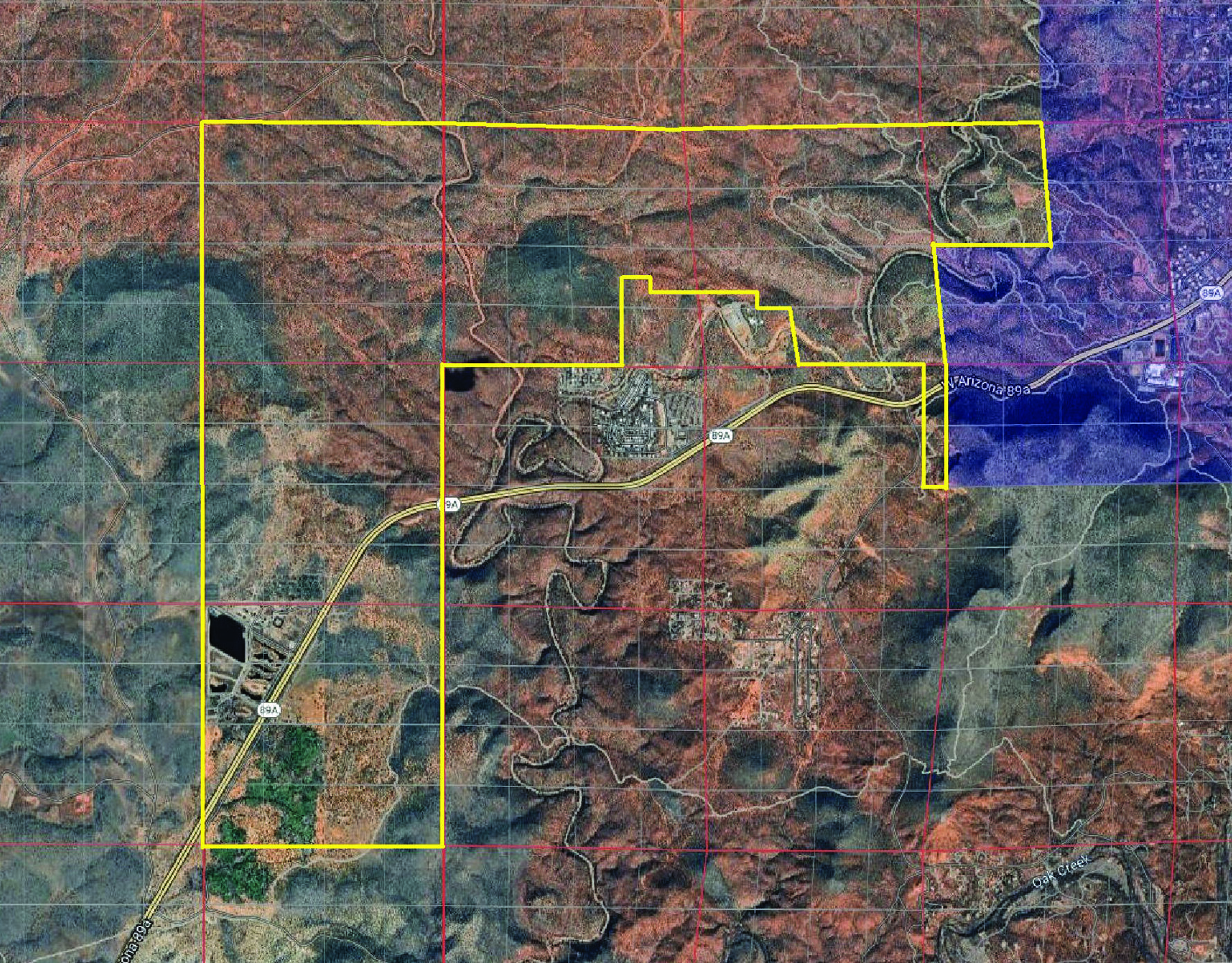
The Sedona City Council voted 6-1 to approve filing a petition with the Yavapai County Recorder to annex approximately 3,422 acres of land, including the city’s Wastewater Treatment Plant and neighboring city-owned property, known colloquially as “the Dells,” into city limits, increasing the city’s size by 29%. By law, annexed lands must be contiguous with the existing boundaries of a municipality, resulting in the “L” shape.

Sedona City Councilman Pete Furman said he was trying not to use the word “sprawl,” but he did eventually use it during the Sedona City Council’s discussion on Tuesday, Dec. 10, of annexing 3,422 acres of mainly Coconino National Forest land west of Sedona.

The annexation would increase the city’s size by 29%.

City Attorney Kurt Christianson explained that the proposed annexation would extend Sedona’s western boundary by approximately three-anda-half miles further west, and then three and a quarter miles south, across an L-shaped area occupied entirely by the Coconino National Forest, Arizona Department of Transportation right-of-way and the city’s Wastewater Reclamation Plant and undeveloped property colloquially known as “the Dells.” State law does not permit municipalities to annex islands, so state contiguity requirements resulted in this shape in order for the city to connect the desired parcels to its existing boundaries.

“There are no other proposed annexations of any real property, although it does touch the Sedona Shadows development,” Christianson said. “No one in Sedona Shadows or Sedona Pines or El Rojo Grande Ranch, their property, is proposed to be annexed in this.”

“It’s literally just a function of bringing in our own owned property within the city limits,” Councilman Brian Fultz said.

“It’s not like we can develop it. We don’t own it,” Christianson said. “It’s just a way to get to the wastewater treatment plant.”

“We did a pretty good job talking about ‘the what’ and ‘the ‘how’ but not ‘the why,’” Furman said. “You leave me scratching my head about what ‘the why’ is, what the problem is we’re working to solve.”

“To show other cities that we are interested in this area and we don’t want other cities coming in to encroach on it,” Christianson said. “Two, it’s to facilitate the development of the city’s transit and maintenance operations facility … This would just make clear that it’s part of the city’s — that [Yavapai] County has no authority over it anymore.”

The proposed transit facility has not yet been approved by council, while outgoing City Transit Administrator Robert Weber has repeatedly referred to the city’s transit program as experimental and said it could shut down due to lack of need.

City Manager Anette Spickard declined to comment on what steps the city would take if it annexed the land but council shutters the transit program.

“Has the county interfered with, or unexpectedly or unnecessarily complicated the work that we’ve done at the water treatment plant?” Furman asked.

“That’s exactly the question,” Christianson said. “We told them we were going to be building this, and they said under what authority can you just do that. It was explained to them, they said we disagree … It was explained that we have this IGA [intergovernmental agreement] with you that says we can do this, and they said that’s inapplicable … We just kind of went back and forth.”

Christianson described staff expenditure on the project so far as “a significant amount of staff time,” “many weeks’ work” and “the greater part of the summer.”

Public Comment

Four Sunset Hills residents spoke on concerns related to having the city’s boundary adjoining that of their community.

“Why suddenly do you feel a need to go out and encompass that?” Trish Janke asked. “It’s been working fine the way it is; why suddenly is there a need for a change?”

“We are still concerned about the vagueness of what’s going to come in the future,” Bonnie Johnson said. “Can we get any assurances of no development back there in the future?”

Development

“The city cannot develop Coconino National Forest,” Christianson said. “The only way anyone could develop Coconino National Forest … would be, I believe, through a land exchange. A land exchange means that you own National Forest property somewhere else and you’re wanting to exchange it with the National Forest — they generally will want more valuable property for less valuable.”

“Often, a land exchange has to be approved by an act of Congress,” Christianson added.

The Red Rock Ranger District has had an effective moratorium on land exchanges since 1998. Land exchanges are rare, such as the one that transferred the property for the future Sedona Cultural Park to a nonprofit in 1998; the 2005 auction of 21 acres of the old Sedona Ranger Station on Brewer Road for $8.4 million; a proposed swap of 369 acres owned by Yavapai County near Cottonwood in 2018 for 80 USFS acres in Cornville; and a recent swap with the Yavapai-Apache Nation to trade 4,782 acres of lands the tribe bought in the Prescott, Coconino, Kaibab and Apache-Sitgreaves national forests for 3,207 acres of USFS land adjacent to tribal lands.

“I really fail to see the necessity of making this effort today,” Furman said. “The city’s cost structure is largely determined by its size … expanding our footprint will likely have a significant impact on future budgets.”

“It’s actually in our interest to have this land be part of the city and under our control,” Vice Mayor Holli Ploog said.

“It is about us having control of what we need to build out there,” Councilwoman Melissa Dunn said.

Councilwoman Kathy Kinsella said she would be more comfortable with Sedona controlling the zoning instead of Yavapai County should a U.S. Forest Service land exchange take place at some point in the future.

“Who’s the best stewards for this area?” Kinsella said. “I think that’s the city of Sedona.”

Furman, Kinsella and Mayor Scott Jablow all rejected the idea of near-term development of the Dells property regardless of whether the annexation went ahead.

“Stuff this genie back in the bottle,” Furman said.

“I think that the way to protect the Dells is by making sure that it comes into the city’s jurisdiction,” Kinsella said. “It’s one of the few really untouched and pure lands that we have … It’s directly on the water, the creek is right down there, it’s riparian.”

It is unclear as of press time what creek Kinsella meant; Oak Creek is approximately 1.4 miles from the Dells at its nearest point and the Verde River is 7.2 miles away. The Dells is currently used for spraying of the treated effluent from the city sewage plant and as leased pasture for cattle.

Council voted 6-1 to proceed with the annexation process, with Furman opposed.

A public hearing on the proposed annexation is currently scheduled for Jan. 14. Council can halt the annexation process at any point during the process.

  • « Go to Previous Page
  • Go to page 1
  • Interim pages omitted …
  • Go to page 7
  • Go to page 8
  • Go to page 9
  • Go to page 10
  • Go to page 11
  • Interim pages omitted …
  • Go to page 20
  • Go to Next Page »

FISCAL RESPONSIBILITY • HONESTY • OPEN GOVERNMENT

  • Email
  • Facebook
  • Instagram
  • LinkedIn
  • YouTube

Sedona City Councilmember Pete Furman

Copyright © 2026 | Paid for by Pete Furman | Website by Pivot Strategies, Inc.

  • Home
  • About Pete
  • In the News
  • City Meetings
  • Contact Pete