• Skip to primary navigation
  • Skip to main content

Sedona City Councilmember Pete Furman

  • Home
  • About Pete
    • Meet Pete
    • Pete’s Priorities
    • Pete’s Perspectives
  • In the News
  • City Meetings
    • Upcoming Sedona City Meetings
    • Sedona City Meeting Summaries
  • Contact Pete
  • Show Search
Hide Search

In the News

Divided council approves new lease for Villas on Shelby

Pete Furman · May 14, 2025 ·

Divided council approves new lease for Villas on Shelby – Sedona Red Rock News

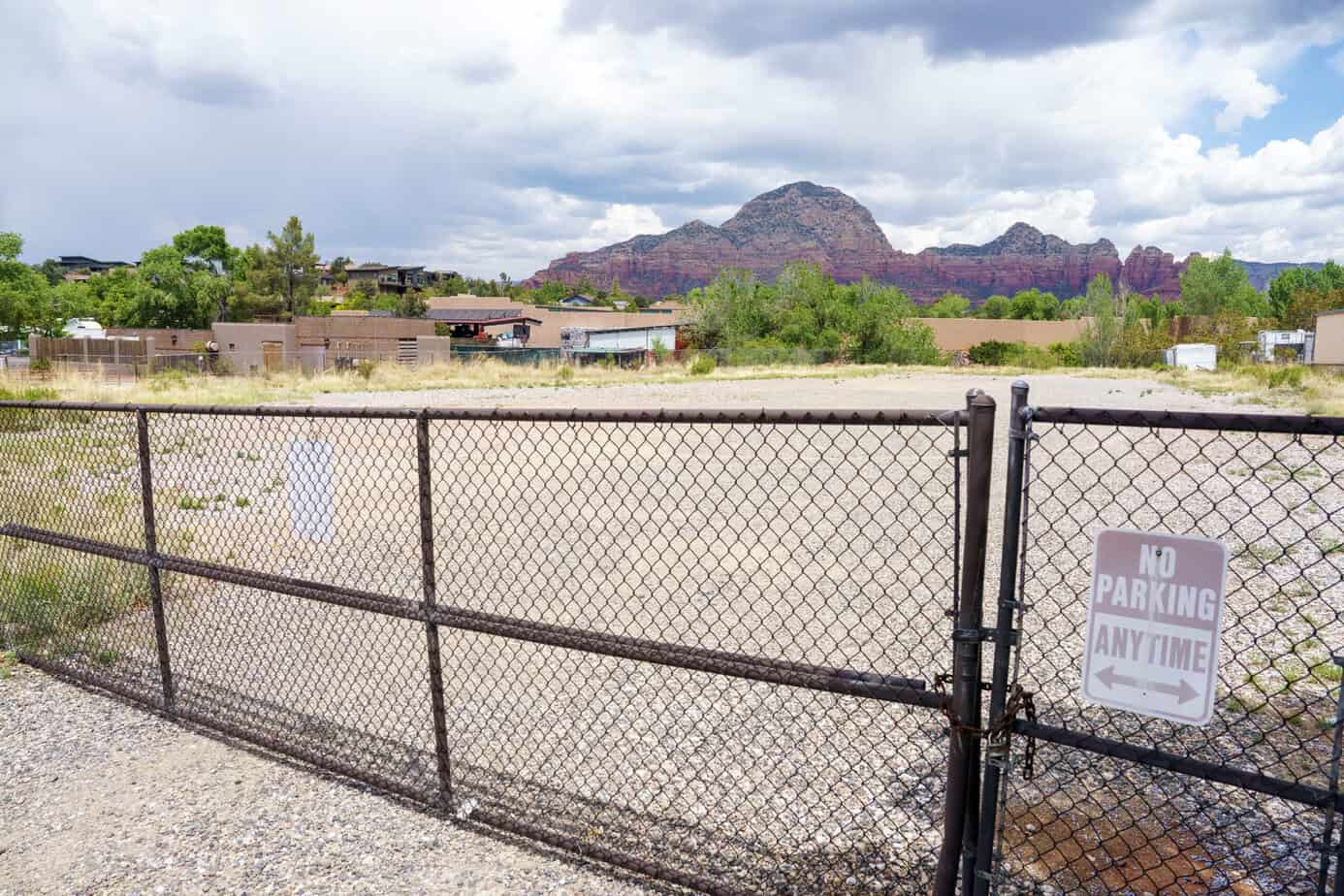
The Sedona City Council voted 5-2 to approve a ground lease and a $2.25 million loan for the proposed Villas on Shelby 30-unit, three-story apartment complex during its April 28 meeting. The project site is pictured on May 2. Under the terms of the previous lease, the developer was required to begin construction by Dec. 31, 2024. Developer Matt Shoemacher had told the City Council on March 25, 2025, that he expected to break ground at the beginning of April, after previously stating in January 2024 that he expected to start construction in mid-spring of that year. Photo by David Jolkovski/Larson Newspapers.

After a contentious discussion, the Sedona City Council approved a ground lease for the proposed Villas on Shelby 30-unit, three-story apartment complex project by a 5-2 vote during its April 28 meeting, with Vice Mayor Holli Ploog and Councilman Derek Pfaff opposed.

The approval had been scheduled for April 22 but was tabled until the following week due to council concern over available time to review lease changes that will significantly increase the city’s eventual cost to purchase the project.

City Attorney Kurt Christianson said the city had previously approved two similar leases for the city-owned parcel at 2250 Shelby Drive, the first in support of a 9% Low Income Housing Tax Credit application by the developer, and the second in support of a 4% LIHTC application, which would have required the units to remain affordable for 75 years, committed the city to a $2.25 million loan to the project and given the city the option to purchase the project for $100 after 30 years.

“It was on April 3, just two weeks ago, that the city found out that the option to purchase for $100 at year 30 was not going to be able to be in the lease and that the option to purchase would have to be fair market rent,” Christianson said. “It was on April 15 that the city found out that the affordability period could not be for 75 years, that it would have to be only for 30 years, and then it was just on Friday, on April 23, that the city found out that the lease term had to be 99 years instead of 75 years.”

The revised lease to meet LIHTC requirements will allow the city to purchase the complex at market value after 15 years, while retaining the $2.25 million city loan to the project, which will carry an interest rate of 5.83%.

Housing Manager Jeanne Blum said that “close to $20 million in outside funding sources are being contributed” to the project in partnership with investment funds.

The agenda bill for the resolution approving the lease stated the project’s additional financing would include a $5 million loan from the Arizona Department of Housing, $8 million in tax-exempt bond funding and a $7.525 million “construction loan” and $1.365 million “permanent loan” from unspecified investors for a total of $24,140,000.

The agenda bill also stated that staff had asked council to waive $18,924.26 in review and permitting fees and pay $312,245.41 in development impact fees for the project, a total of $331,169.71, in addition to the city loan. The fee waivers and payments would increase the city’s total contribution to $2,581,169.71 and the estimated total project cost to $24,471,169.71.

Developer Matt Shoemacher stated in January 2024 that the cost of the project was then “right at $14 million,” or $466,666 per unit; on the basis of the new project cost, that has now risen to $815,706 per unit.

“We plan on closing and breaking ground in two weeks,” Shoemacher said on April 28, adding that the closing date had been scheduled for May 9 and that bond funding would remain available for roughly 60 days.

Although he was presenting a proposal to build an apartment complex, Shoemacher also said that locals to whom he has spoken “want to be the next homeowners.”

“I don’t think I can support this,” Pfaff said. “We started with the benefit to the city was going to be this … and then in the last few months it’s sort of been whittled down to, now we’re getting this. That doesn’t sit right with me.”

“I have concerns that this project has just gotten a worse and worse deal for the city. I’m probably going to vote ‘no,’” Pfaff added.

“I think I’m begging for two more weeks to see if we can get some outside independent advice of looking at this deal,” Councilman Pete Furman said.

“The affordability was taken out of our control,” Shoemacher said. “It’s a 30-unit deal that has 4% credits with two pieces of subordinate debt. That’s the only way to make a project here work.”

“With this not giving the same terms to the city, there might be a future responsibility to the city … to be having an additional financial contribution, and I think we need to consider that,” Councilwoman Kathy Kinsella said. “I hate kicking the can down the road on this, but I think there is some research that could be done in those areas over the next two weeks.”

“There’s dozens of attorneys that are experts in this that we’ve had conversations with. They’re not going to say anything different,” Shoemacher said. “I don’t know if there is the time to go through another two weeks and then pick it up again,” adding that it would be complicated to reschedule the 75 people involved in negotiating the deal for a different date. “At a certain point the tax credit investor is going to say ‘we can’t change this and this, these are federal opinions, we have to be compliant with federal banking laws.’”

“I was under the impression there was a drop-dead date,” Kinsella said. “Would a date of like the [May] 12th be too late?”

“To be blunt, we haven’t had any of this information until the 11th hour and 59 minutes. We felt the rug pulled out from underneath us in the past month on this where things have changed due to the negotiation points,” Mayor Scott Jablow said. “To me it felt like somebody up there is negotiating in bad faith, because they weren’t giving us a lot of information 18 months ago. When we started, we had a totally different picture of what it was to dealt with LIHTC 18 months ago, and it’s certainly not what we’re getting now.”

“The terms are what the terms are. I don’t think there’s a lot of room left,” Christianson said.

“From a straight business perspective, having terms change this dynamically, and unfortunately negatively, right up to the last minute is really unpalatable,” Councilman Brian Fultz said. “That said, I think that we are wasting time and putting the project at risk to go and seek additional consultation.”

“If we kill this, we’re still going to wind up spending as much money one way or another to get something done,” Fultz added.

“I’m not in favor of the terms, but they are what they are,” Councilwoman Melissa Dunn said.

“Nobody has given me the assurances I need,” Ploog said. “This is not a good deal for the city … We’re talking about a substantial amount of money that we’re going to put on hold every year for the next 15 years that we won’t have access to.”

“Dealing with LIHTC has left a bad taste in my mouth, and I tell you what, I’m going to be letting every city and town that I talk to in this state know that this is the way they negotiate,” Jablow said. “This is wrong.”

“I don’t think we’re urgent for a project,” Jablow added. “I’m going to support this and I’m probably going to kick myself one way or the other.”

The council then voted 5-2 to approve the lease and loan with Pfaff and Ploog opposed.

City Council blocks private sport courts

Pete Furman · May 3, 2025 ·

City Council blocks private sport courts – Sedona Red Rock News

A pickleball court at a private home in Sedona on May 1. The Sedona City Council recently voted to impose restrictions on the construction of pickleball courts on private property that will effectively prohibit them on many lots smaller than four acres in size. Photo by David Jolkovski/Larson Newspapers.

The Sedona City Council voted unanimously to approve an ordinance amending the Land Development Code to impose restrictions on the construction of new private sport courts during its April 22 meeting.

Noise

Council had previously directed staff to draft such an ordinance on Oct. 9 after hearing a series of complaints from residents of one neighborhood that the noise from a private pickleball court being constructed in that neighbor hood would be hazardous to their and their dogs’ health.

Planning Manager Cari Meyer informed council at that time that the city had no record of any noise complaints associated with the city’s 13 existing private sport courts.

Resident Becky Hofer said during the Oct. 9 hearing that pickleball play produced sound levels of 110 dB “at the paddle.”

Due to physics, the sound from a 110-dB pickleball strike diminishes to 60 dB, the city’s noise limit for residential areas, at 26.35 feet away from the paddle and to 50 dB at a distance of 85 feet. At a distance of 200 feet, a 110-dB noise would diminish to 42.4 dB, quieter than a refrigerator.

Definition

The amendments to the LDC would define a sport court as “any flat, hardscape area of dimensions exceeding 20 feet by 30 feet, specifically designed for athletic purposes, including, but not limited to, basketball courts, tennis courts, handball courts, racquetball courts and pickleball courts, but excluding pools and driveways used exclusively for access to a garage.”

A sport court would become a conditional accessory use on a property and require that such a court be set back at least 200 feet from any property line unless it met at least two of five criteria, in which case the setback could be reduced to 25 feet: Incorporated sound mitigation to reduce the sound from the court at the property line to less than 50 decibels; was located on a common piece of property for use by multiple owners; other property owners within 200 feet agreed to the reduced setback; was separated from the property line by buildings; or was surrounded by city or U.S. Forest Service property not capable of development.

The minimum size of a property that could contain a 20-by 30-foot court surrounded by 200-foot setbacks would be 4.15 acres, while the minimum size of a property to which 25-foot setbacks could apply would be 5,600 square feet.

A sport court must also be surrounded by a fence or wall and would not be allowed to be rented separately from the property. The use of sport courts before 8 a.m. or after 8 a.m. would also be banned, unless modified by a conditional use permit, and any lighting of courts on single-family proper ties would be prohibited.

The Planning and Zoning Commission previously approved the proposed LDC amendments by a 6-1 vote on March 18, with Commissioner Kali Gajewski voting against the ordinance on the grounds that it felt anti-family.

Conditional Use Permit

“It kind of looks like we’re setting the table for a group of people in an HOA to put a sports court next to a private residential home that’s not — and allow them to have a setback,” Councilman Pete Furman said with regard to the CUP provision.

“If it’s a group of property owners coming together and saying we want to build this, we felt that was a way to allow the HOAs to do it,” Meyer said.

“In a wrong-headed enforcement machine, which I don’t think we have now, the words exclusively used for access to a garage could turn bad,” Furman said. “If someone has a driveway that they start to play basketball in … there could be an interpretation that that driveway is no longer exclusively used for a garage.”

“The intent of it was to not allow someone to pave an extensive area and say this was all my driveway,” Meyer said. “I don’t see that in that ability,” City Attorney Kurt Christianson said.

Councilwoman Kathy Kinsella asked if the word “exclusively” could be removed from the ordinance language.

“That was a definition we found from another city, and it seemed like a definition that would work, so we used it,” Meyer said. “The intent was that people couldn’t just pave every thing and kind of connect it all and call it their driveway and get around the regulations.”

“I think it’s describing the access, not necessarily the use,” Christianson said.

Mayor Scott Jablow asked if the new rule could be used to prohibit courts on the remaining vacant lots in a subdivision near his house.

Becky Hofer, Bob Pifke and Norris Peterson supported the ordinance during the public comment period.

Council Comments

“I’m just still a little bit fuzzy on whether the CUP is a necessity or not,” Councilman Brian Fultz said.

“This could be us worrying about something when there could only be two sports courts in the next 10 years,” Councilwoman Melissa Dunn said, adding that while it might be “overly burdensome” to have the CUP applications sent to P&Z rather the community development department, staff would tell them if there was a problem.

“I don’t understand the CUP either. I think it’s unnecessary,” Vice Mayor Holli Ploog said. “It seems cumbersome to conduct a public hearing.”

“I’m in favor of the CUP process,” Councilman Derek Pfaff said. “These things prob ably don’t belong in residential neighborhoods, so if there’s a little bit of an extra burden that people have to go through in order to construct one, I’m fine with that.”

“I just don’t think it’s going to happen all that much,” Councilman Pete Furman said with regard to the CUP process, adding that he would trust staff’s interpretations of the language, but suggested that the city could have achieved “a much finer tuned solution” without an LDC change by modifying the noise and lighting ordinance. “We’re coming out a little bit unfriendly, perhaps, sounding to families and people that want to do things in their backyard.”

“I don’t think this would create an undue burden because we don’t expect that many of them,” Kinsella said.

“I trust the staff if it goes to staff instead of going to P&Z,” Jablow said.

The council then passed the ordinance unanimously. It will take effect on Thursday, May 22.

Council raises workforce rent cap by 13.6%

Pete Furman · April 18, 2025 ·

Council raises workforce rent cap by 13.6% – Sedona Red Rock News

Homes and apartments in Uptown on Oct. 16, 2020. The Sedona City Council recently voted to increase the rental cap for its Rent Local program by 13.6% in the hope of attracting additional participants. Seven property owners have signed up for the program in the last three years. Photo by Daulton Venglar/Larson Newspapers.

The Sedona City Council voted for a 13.6% increase in the rental rate cap for the city’s Rent Local program on April 8. Council spent 41 minutes considering the change, which had originally been scheduled to take five minutes.

The program was created in August 2022 with the aim of inducing property owners to rent their properties for terms longer than 30 days by offering a one-time financial incentive. Participants must agree to refrain from renting their properties as short-term rentals for one year after signing up and cannot charge rents that are greater than the monthly rental cap set by the city.

“We simply want to raise the rental cap to $2,500 per month from the original $2,200 per month,” Housing Manager Jeanne Blum said. “We want to do this to better align with current market rates and encourage more home owners to participate.”

“Participation rates do remain low because the rental caps are kind of misaligned with our market rates,” Blum said. “Most potential participants have been discouraged because the rental cap is below what they can bear.”

According to the information provided to council by city staff about the current rental market in Sedona, which Blum said was derived from an “ad hoc study,” the average monthly rent is Sedona is $1,762 for a one-bedroom, $2,424 for a two-bedroom and $3,553 for a three-bedroom, compared to U.S. Department of Housing and Urban Development fair market rates for Yavapai County of $1,293, $1,606 and $2,048, respectively. Blum also estimated that a studio would run between $1,200 and $1,900 a month, while the rent for the few properties currently partici pating in the Rent Local program is $1,500 a month to $2,200 a month.

Councilwoman Kathy Kinsella asked why staff were not suggesting that the cap be raised to $2,700 per month.

“It’s not appropriate,” Blum said. “It’s a burden.”

Blum also argued that raising the rental cap, in combination with the one time incentive, would bring a landlord’s potential return up to an amount closer to the market rate for a three bedroom home, or $3,333 per month. The one-time incentives offered through the program are $6,000 for a studio, $7,000 for a one bedroom unit, $8,500 for a two-bedroom and $10,000 for a three-bedroom, while those renting individual rooms can receive $3,000 for a single room, $4,000 for two rooms and $5,000 for three rooms. The program paid out $8,500 in incentives out of a budget of $240,000 in fiscal year 2023, $31,250 against a budget of $100,000 in FY23 and $14,250 against a budget of $100,000 in FY25, with the budgeted amount for FY26 having been reduced to $50,000.

A total of seven properties have been enrolled in the program; the council’s packet for the April 8 meeting states that three of those renewed for a second year.

Blum said that renting properties long-term would reduce maintenance costs for property owners over short-term renting.

“The increase covers the first year, gets closer in the first year, and then goes away. Maybe that’s why only three households have renewed their leases in year two,” Vice Mayor Holli Ploog said.

“Of course, if the incentive were available for multiple years, there would be more traction in the program, more longevity,” Blum said.

“Perhaps there are modifications in addition to the increase in the cap that we should consider,” Ploog said.

“The number of registered STRs has continued to increase over the life of the program, and yet we still aren’t getting meaningful traction,” Councilman Brian Fultz said. City statistics show that the number of STRs increased by 6.4% between 2018 and 2024.

“At what point do we say that this is a strategic distraction?” Fultz asked.

“I don’t think it is a distraction,” Blum said. “If it helps one family, in my view that’s successful.”

“The housing that we need is two- to three-bedroom,” Lindsey Hammersmith said during the public comment period. “I agree with the amounts that were brought up today.”

“What we’re seeing on the sales market is that a lot of these short-term rentals now are going out to market, and if they were sold today, I know of a local one, a three-bedroom, two-bath, that if I were to purchase that, my mortgage would be about $4,000 a month,” Hammersmith added. “So you really kind of perpetuate this needing to do a short-term rental continuation.”

“I’m fine with giving this a try as requested, but I’m skeptical that it’s going to work,” Fultz said, saying that “the average short term rental is still grossing $3,200 a month.”

“I’m willing to try it,” Councilwoman Melissa Dunn said, but expressed concerns about the program merely “deferring homelessness.”

“Maybe we need to have an incentive that increases if you leave a property in the program,” Councilman Derek Pfaff suggested.

“We’re not trying to compete in the marketplace. We’re trying to find that trip level,” Councilman Pete Furman said.

“We can never compete with the market,” Kinsella said. “We were trying to find someone’s better side.”

Council voted unanimously for the increased cap.

Council returns ADOH homelessness grant

Pete Furman · April 15, 2025 ·

Council returns ADOH homelessness grant – Sedona Red Rock News

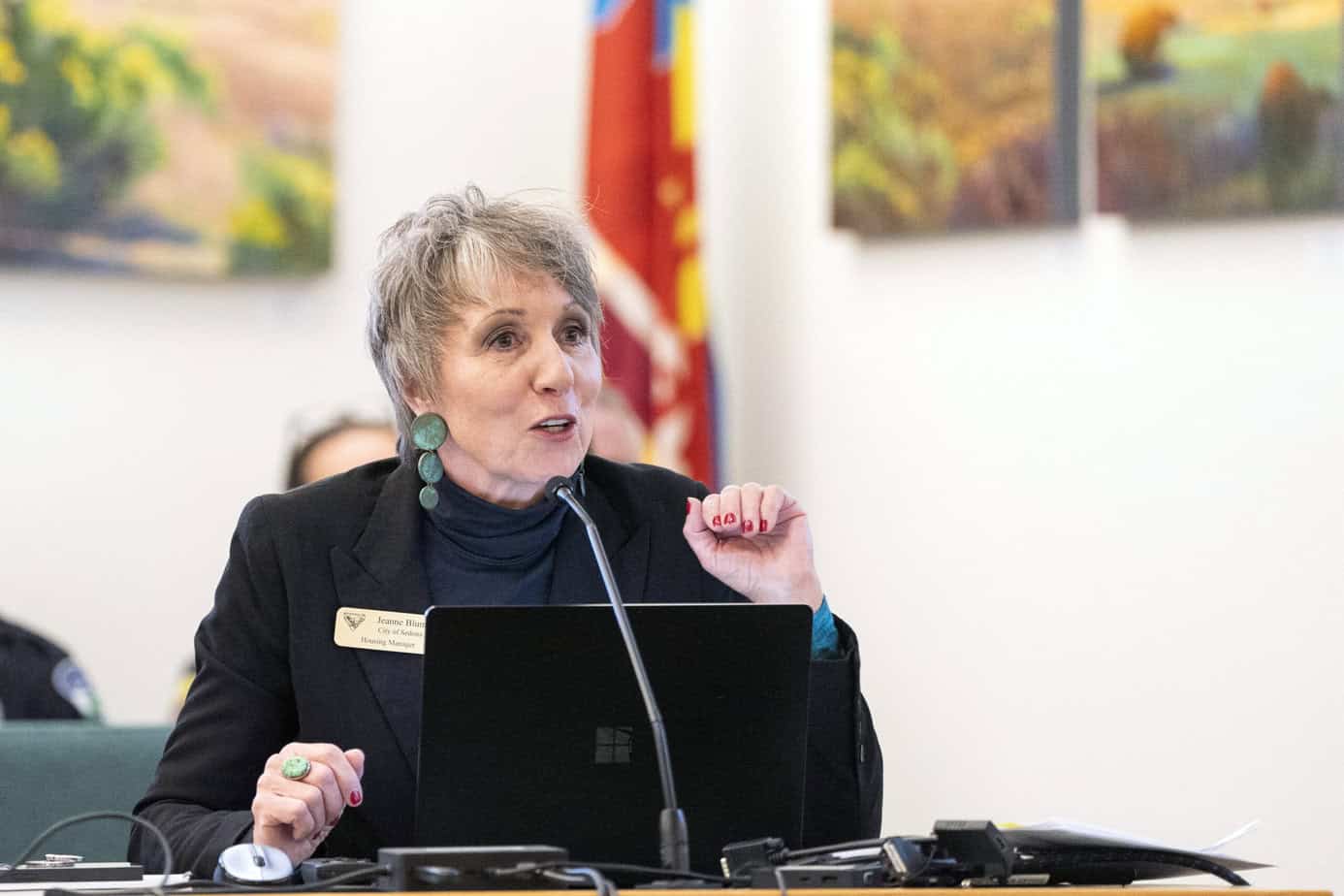
Sedona Housing Manager Jeanne Blum addresses the Sedona City Council during a meeting on the city’s proposed homelessness strategy on Jan. 29. Photo by David Jolkovski/Larson Newspapers.

The Sedona City Council’s proposed rental assistance program is off the table after the council voted unanimously on April 8 to return the Arizona Department of Housing grant originally intended to fund the planned car camp for homeless workers at the Sedona Cultural Park to ADOH to be redistributed to organizations in the Verde Valley.

Council had previously discussed a city staff proposal for reallocation of the $875,638 grant on Feb. 11, which would have redirected the funding to a two-year program run by Catholic Charities Community Services to provide rental assistance to homeless individuals or pay to move them out of the Sedona area.

“Council, during the discussion, wanted to clarify the eligibility requirements to explore potential impacts on Sedona homeless students,” Housing Manager Jeanne Blum said. “School students fall under a different category … they are not necessarily experiencing literal homelessness, which is what this funding needs to target … some of the homeless students who are in Sedona may not qualify for this particular program.”

“Staff was directed to come back with an amended scope of services that was kind of Sedona-specific, to serve the local community, and make sure that the persons that we were served had a verifiable Sedona connection,” Blum continued. “There were some challenges with that, because it reduces the number of households that are being served and it’s pretty much unlikely the city will expend the full grant. Additionally, the Department of Housing may prefer a broader service area.”

The alternative option, Blum said, would be “to request a transfer of the grant to a qualified nonprofit,” which would “expand housing opportunities for more people, and it would also ensure data collection for future policy decisions.”

“Staff recommendation is to transfer the grant to a qualified nonprofit,” Blum concluded.

In discussion with ADOH, “we learned about this distinction between the two definitions of homelessness that would not allow us to serve the students at the school district,” City Manager Anette Spickard added. With regard to staff’s estimate that the amended scope of work would only affect about 25 families, instead of the 103 estimated in the original proposal, “ADOH was a little concerned that would be too small and not meet the legislature’s intent for this grant.”

“Our grant would actually just be transferred back to ADOH for them to administer directly,” Spickard said. She clarified that council could ask staff to set up a separate city-funded program to benefit homeless students.

Councilwoman Kathy Kinsella asked what would happen to the unexpended funds if the city was unable to spend them all due to a reduced scope of work.

Since it was a reimbursement grant, “it just stays with the state,” Blum said.

“Do we have reason to think that Catholic Charities will still be the qualified service provider when the grant is reassigned?” Kinsella asked.

“My understanding is that they would work with them,” Spickard said. “They would still have this network of referrals happening.”

Councilman Brian Fultz asked staff to assess ADOH’s response to the council’s desire for “this really strong nexus.”

“They were a little lukewarm about our original request to scale it down to just the Sedona nexus because it doesn’t meet the full intent of the legislature,” Spickard said. “I don’t think they would accept the transfer and then only spend the money on Sedona nexus people. I think they will do Verde Valley region because that’s the underserved community in the state.”

“So you’re saying a nexus still exists, just the nexus is a wider area of the region,” Kinsella said. Spickard and Blum agreed.

“These are all very soft terms,” Councilwoman Melissa Dunn said. “Is there an assurance that Sedona will be considered as part of the Verde Valley?”

“In the conversation with ADOH staff, they did state clearly to me that when we request the transfer of the grant, that we could identify some terms for that, and they threw things out like, you will get data and reporting that you request, things like that, which tells me that we have some influence on what that new contract’s going to look like with Catholic Charities,” Spickard said.

Public Comments

“I do support you all looking at a regional solution to a regional challenge,” Sedona Chamber of Commerce President David Key said. “I think that feels appropriate.”

“The rental assistance funding … would have a direct and immediate impact. It could help families in our program move more quickly into permanent housing,” said Elizabeth Slane of Hope House of Sedona. “Anything that help the homeless in Sedona I think need to be considered.”

“I support the idea of moving these funds either the original plan, which is, what, phase two, where we contracted with Catholic Charities, or we give to ADOH and have them allocate it,” Jo Martin said. “We are relying on the administration of the state to give us help … We’re trusting the state to help our community instead of us maybe having more control over those funds.”

“The grant is a solution in search of a problem,” Bill Noonan said. “It’s a bit of an affront to the democratic process that the city reconsidered applying for this grant or that the state of Arizona is still trying to foist it on us through this NGO.”

Council Comments

“Nobody denies that there are homeless people here, but there is a perspective about whether it is a big monumental problem deserving of big government resources or not, and when we’ve spent no money, essentially, on it, to go from that to $875,000 in two years is a pretty big ramp-up,” Fultz said. “I support moving that money back to ADOH. I certainly hope that we will provide direction that says that any recipient needs to have a strong nexus then to the Verde Valley so it’s not a ‘come one, come all,’ it’s not an incentive for van lifers to participate.”

“I would go with moving ADOH money further into the region,” Dunn said. “I would like for us to have some kind of assurance that people who are in Sedona have a way of getting resources, whether it’s at the library or wherever.”

“I also support moving the grant from Sedona to an NGO and serving the Verde Valley,” Vice Mayor Holli Ploog said. She added that the number of people to whom the original plan proposed to provide assistance “was more than we had in Sedona to serve.”

“I support the money going back to ADOH … the homelessness here is a regional issue,” Councilman Derek Pfaff said. “I don’t think we attach strings to it. We’re trying to have it both ways.”

“Regional solutions are the right approach,” Councilman Pete Furman said. “We need to be good partners in the Verde Valley on this issue.”

“I think it’s important to make sure the full amount of money that’s available from the state can be utilized,” Kinsella said.

“I don’t support putting restrictions on ADOH. They know what they’re doing, they do it best,” Mayor Scott Jablow said. The council then voted to send the money back.

Sedona City Council votes 6-1 to annex 3,422 acre

Pete Furman · April 7, 2025 ·

Sedona City Council votes 6-1 to annex 3,422 acres – Sedona Red Rock News

The Sedona City Council approved annexing 3,422 acres west of town in a 6-1 vote on March 25. The annexation will become effective 30 days after the approval of the ordinance, which Sedona City Attorney Kurt Christianson said would be April 24. Map by Larson Newspapers.

In five minutes, Sedona got about 30% bigger — or rather, it will on Thursday, April 24, when the annexation of 3,422 acres west of town takes effect.

The Sedona City Council approved the annexation ordinance in a 6-1 vote, with Councilman Pete Furman opposed, on March 25.

City Attorney Kurt Christianson called council’s attention to “one little unique bit of information that came out during the preparation of the ordinance.”

“As required by state law, all the area annexed will be zoned to the city’s most — basically the same zoning the county has. It can’t be any less or more restrictive, we need to match it as best as we can,” Christianson said. “I thought originally that all the property was the county’s RCU-2A, so two units an acre of residential. Turns out this one little section right here by the Cultural Park is basically one unit an acre instead of the two units an acre. So this little square right here, this is the section 16, town ship 17, north range 5, shall be zoned city of Sedona RS-35, so that corresponds pretty well. The whole rest of the annexation area will automatically be zoned per the ordinance RS-70.”

“That’s kind of a lot to say about nothing because none of this can be developed, necessarily,” Christianson added.

He also noted that staff would likely ask for the city’s wastewater treatment plant to be rezoned to Community Facilities at some point in the future.

“It’s a little bit strange, but we’ll probably move the city limit signs,” Christianson said. “We’ll probably move it and-or duplicate it, and put another one on [State Route] 89A right by the wastewater treatment plant.”

There was no public or council comments and no discussion prior to the vote.

The annexation will become effective 30 days after the approval of the ordinance, which Christianson said would be April 24.

  • « Go to Previous Page
  • Go to page 1
  • Interim pages omitted …
  • Go to page 4
  • Go to page 5
  • Go to page 6
  • Go to page 7
  • Go to page 8
  • Interim pages omitted …
  • Go to page 19
  • Go to Next Page »

FISCAL RESPONSIBILITY • HONESTY • OPEN GOVERNMENT

  • Email
  • Facebook
  • Instagram
  • LinkedIn
  • YouTube

Sedona City Councilmember Pete Furman

Copyright © 2026 | Paid for by Pete Furman | Website by Pivot Strategies, Inc.

  • Home
  • About Pete
  • In the News
  • City Meetings
  • Contact Pete