• Skip to primary navigation
  • Skip to main content

Sedona City Councilmember Pete Furman

  • Home
  • About Pete
    • Meet Pete
    • Pete’s Priorities
    • Pete’s Perspectives
  • In the News
  • City Meetings
    • Upcoming Sedona City Meetings
    • Sedona City Meeting Summaries
  • Contact Pete
  • Show Search
Hide Search

Pete Furman

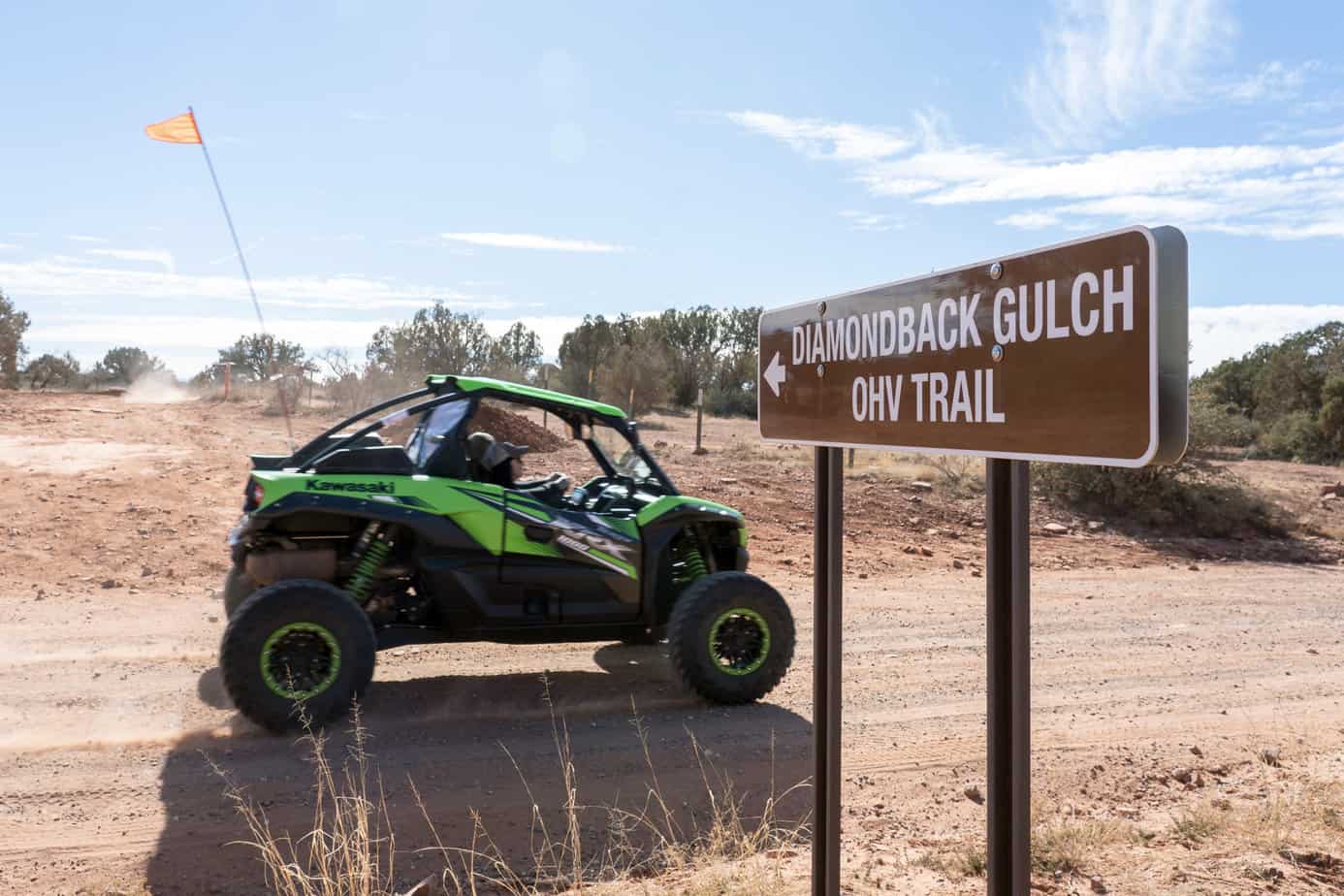
Sedona City Council rejects own study on OHVs & health

Pete Furman · January 5, 2024 ·

Sedona City Council rejects own study on OHVs & health6 min read (redrocknews.com)

A breakdown of the ownership of OHVs observed on major OHV trails near Sedona. Photo courtesy city of Sedona.

The city of Sedona’s latest study on the environmental effects of off-highway vehicles, which became available in June, revealed that there are no significant environmental or health problems resulting from the use of OHVs inside or outside the city. The members of the Sedona City Council have subsequently rejected the study’s results, questioning their validity.

Study Results

The purpose of the study, as outlined by City Manager Karen Osburn, was “to discern whether or not there were environmental impacts significant enough that would necessitate banning OHVs on city streets.” The study was conducted by the consulting firm Kimley-Horn, the only respondent to two separate RFPs the city had issued, at a cost of $99,000.

The study examined traffic at the trailheads on Soldier Pass Road, Forest Road 152C, Schnebly Hill Road, Dry Creek Road and Broken Arrow Road. The average daily number of OHVs observed at each location, including SUVs, ATVs and UTVs, was 111 for Broken Arrow, 114 for Dry Creek, 197 for Schnebly Hill, 153 for FR 152C and 25 for Soldier Pass. SUVs such as Jeeps accounted for 28% of traffic on FR 152C, 56% on Dry Creek, 70% on Schnebly Hill, 83% at Soldier Pass and 84% at Broken Arrow.

Only on FR 152C were side-by-side UTVs the dominant vehicle type, at 53%.

The majority of OHVs observed at all locations except Soldier Pass were personal vehicles, which accounted for 43% of trips on Dry Creek, 47% on Schnebly Hill, 53% on Broken Arrow and 57% on FR 152C.

Tours accounted for more than 30% of traffic on Broken Arrow, Dry Creek and Schnebly Hill; 15% on FR 152C; and 83% on Soldier Pass.

Ambient noise levels at trailheads were between 48.6 and 62.8 decibels, while noise levels observed during the passage of OHVs ranged from 72.9 to 98.7 dB. As the report noted, short-term hearing damage occurs at or above noise levels of 120 dB, or more than 100 times greater than those produced by the passage of an OHV — the decibel scale is logarithmic, not linear.

The average noise levels generated during periods of vehicle activity was 87 dB, below the level of 90 dB at which hearing damage can occur over periods of prolonged exposure. The report stated that the highest observed level of OHV noise was “similar to standing next to a gas-powered lawnmower.”

Average dust levels were measured for both 10-micron and 2.5-micron particle sizes. The results obtained for 10-micron particles were 16 micrograms per cubic meter at Dry Creek, 18 at Schnebly Hill, 21 at Soldier Pass and the upwind section of Broken Arrow, 41 on the downwind section of Broken Arrow and 66 on FR 152C, an unpaved road. For 2.5- micron particles, the results were 9 μg/m3 on Schnebly Hill, 11 on both sections of Broken Arrow, 13 at Soldier Pass and Dry Creek and 30 on FR 152C. Federal air quality standards for dust exposure include thresholds of 35 μg/m3 for 2.5-micron particles and 150 μg/m3 for 10-micron particles.

“None of the results were anywhere near a threshold,” Osburn summarized. “Yes, the rain was a factor, but they were nowhere near what they needed to be in order to have a justification from a health perspective to ban OHVs.”

Council Reception

“This report sits in city files and is subject to any kind of public request to see it,” Councilman Pete Furman said during the council’s priority retreat on Dec. 13. “I’m really quite concerned about this study … Not only did we have experts in the field come out and do a dust study two days after it rained … I just don’t know how that fits in any expert’s professional ethics.”

“We also know at this point that [Forest Road] 152 and [Forest Road] 525 were closed for parts of this study,” Furman said. The study did not examine traffic on FR 525.

“Where I would like to take this now is for us to put a cover page on that report that talks about all of our concerns and that this report is really not valid, and that anyone in the future that accesses that report sees that we have more questions, we really shouldn’t rely on that data,” Furman said.

“The report is accurate for what it was,” Osburn said. “That’s a point-in-time analysis, and that analysis is accurate for that point in time.”

She explained that Kimley-Horn’s air quality expert “was pretty adamant that even at the highest levels measured, it would not have necessitated or warranted a ban of OHVs because our lungs are built to take in bad stuff for short durations of time.”

“We’ve stood out at the Aerie Trailhead, and we’ve seen air quality there that exceeds the worst I’ve ever seen in Phoenix in the ’80s,” Furman said. “It’s terrible … We’ve done some work and we’re convinced ourselves that there are flaws in the study, but we’re not communicating that … That report didn’t meet our standards.”

“It was as bad as LA ever was,” Vice Mayor Holli Ploog said of a recent trip outside the city limits. “They kept coming and coming … Most of them were owner-owned. They were not rental company vehicles.”

“It’s unfortunate that the study was flawed,” Councilwoman Kathy Kinsella said. “I’m very disappointed in a company that we have had such an active relationship with on so many projects didn’t see fit to say, ‘These are not the right conditions’ … It really is a very poor reflection of their relationship with us.”

“When we start to look at their conclusions around noise, they didn’t measure noise next to where houses are,” Councilwoman Melissa Dunn said. “They measured where the trailheads were. So again, just flawed methodology … I would have expected better for our money.”

Sound pressure levels decrease as the inverse square of distance, so it is not possible for sound levels to be higher in a home at some distance from a trailhead than at the trailhead itself.

“Since we’re not going to rely on the draft but it exists, something simple could maybe go on there, like ‘unaccepted draft’ or ‘draft not used.’ I don’t see the harm in putting something on there that makes it clear that this is a document that has not informed positions that we’re taking,” Kinsella said.

“I would agree to have that ‘unaccepted’ — either a stamp put on it or a cover letter,” Mayor Scott Jablow said.

“Just as a reminder, we have no evidence whatsoever that the end result would be anything different,” Osburn said.

“Right. But we don’t have to accept it,” Jablow said.

“It sounds like many of you believe that there is a health issue,” Osburn said. “And if you believe that there’s a health issue … but we don’t want to assess whether or not it actually does exist, then I just want to make sure that we’re saying, ‘We think it does and we’re concerned about it, but we’re not wanting to do anything further.’”

Councilwoman Jessica Williamson expressed a dissenting view from that of her colleagues.

“I think we should drop this,” Williamson said. “We basically made an arrangement, an agreement, with the OHV people. They’re putting a lot of money into their vehicles on the understanding that if they did that, we would not move forward with banning their vehicles. I believe that’s an agreement we have, and I don’t believe we should seek to back out of that agreement by a different method at this point. I think we made our bed, we made our decision, and I would not support moving forward through another avenue … I would be morally against doing something at this point to try and get OHVs off the road given the conversations we’ve had with the owners.”

City interviews four candidates for new manager

Pete Furman · December 22, 2023 ·

City interviews four candidates for new manager – Sedona Red Rock News

The Sedona City Council is in the process of interviewing four candidates for the position of city manager to replace Karen Osburn, who plans to retire in the coming year. Candidate Carly Castle interviewed with the council on Tuesday, Dec. 12, while Anette Spickard, Darren Coldwell and Greg Caton are scheduled to interview on Monday, Dec. 18.

Interviews are being conducted in executive session, over the objections of Councilman Pete Furman, who on Sept. 12 urged his fellow council members to conduct the hiring process in public to the fullest extent possible and voted against entering an executive session to discuss the process during that meeting.

At the Nov. 29 meeting, Furman again voted against going into executive session to conduct hiring discussions and instead conduct them in public.

“I think the process creation discussions are best done in a public meeting,” Furman said, confirming that his vote was in pursuit of government transparency. “After all, we are setting policy.”

Candidates

Moab City Manager Carly Castle

Carly Castle is the current city manager for Moab, Utah, population 5,366. She has held the position since 2021 and was previously the deputy city manager since 2019. From 2013 to 2019, she worked for the Salt Lake City Department of Public Utilities as a special projects and water resource manager. Her additional experience includes time at the Salt Lake City mayor’s and city attorney’s offices. She received her bachelor’s degree in political science and anthropology from the University of Utah in 2007 and her law degree from Brigham Young University in 2013.

McCall City Manager Anette Spickard

Anette Spickard has been the city manager of McCall, Idaho, population 2,991, since 2018. She previously worked for the city of Springfield, Ore., as public works director and deputy director between 2013 and 2018. Spickard spent most of her career with Lane County, Ore., first as an accountant from 1993 to 2000, then as a budget analyst from 2002 to 2004 and then as deputy assessor and assessor from 2004 to 2013. She received her bachelor’s degree in business administration from Loyola Marymount University in 1991 and her master’s degree in public administration from the University of Washington in 2016.

Page City Manager Darren Coldwell

Darren Coldwell is the current city manager for Page, population 7,440, having taken over the position in 2019. Coldwell spent most of his career as a small businessman in Troy, Mont., where he owned Booze N Bait from 1992 to 2017 and the Troy Mini Mall from 2011 to 2017, as well as serving as the executive director of the Troy Chamber of Commerce. He also served as elected mayor of Troy from 2013 to 2017 before becoming Lincoln County administrator through 2019. He received his bachelor’s degree in communication from the University of Montana.

Grand Junction City Manager Greg Caton

Greg Caton has been the city manager of Grand Junction, Colo., population 65,560, since 2016. From 2010 to 2016, he was the assistant town manager and town manager for Oro Valley. He was formerly assistant city manager of Durango, Colo., from 2002 to 2010. He received his bachelor’s degree in political science from Fort Lewis College in 1996 and his master’s degree in public administration from the University of Colorado at Denver in 1998.

City Communications Manager Lauren Browne declined to provide the names of the more than 100 applicants for the position, citing confidentiality.

RESULTS: CITY COUNCIL MEETING SUMMARY, WEEK OF 12/10/23

Pete Furman · December 17, 2023 ·

12/11/23 Historic Preservation Committee Meeting. CANCELLED.

12/12/23: City Council Meeting; 4:30p @ Council Chambers.
8.b. Status of CDGB Grant Award to Steps for Recovery Homes.
8.c. Purchase of a sculpture for Ranger Station Park. $25K. APPROVED 7-0.
8.d. Status of housing project at 2250 Shelby Drive (Villas on Shelby), and request for a loan of $2.25M. APPROVED 7-0.
8.e. MicroTransit fare policy. APPROVED 7-0. Standard fare $2 ($1 discounted), no free-fare program, don’t prioritize transport to trailhead shoulder.
Agendas and Documents | City of Sedona (sedonaaz.gov)

12/13-14/23: City Council Annual Planning Retreat. 8a @ Council Chambers.
See Agenda for topics. City Manager will update priority list.
Agendas and Documents | City of Sedona (sedonaaz.gov)


OTHER FUTURE TOPICS & MEETINGS (Tentative and Subject to Change)
12/18-19/23: City Manager Finalist Zoom Interviews.
1/6/24 & 1/11/24: Community Plan Review @ SPAC
2/20/24: P&Z Review of Community Plan
2/28/24: Council Work Session of Community Plan
3/12/24: Council Vote on Community Plan
TBD: Know Your Zone Emergency Planning Presentation (2nd review)


Be sure to check back after the meetings to read a summary: Pete’s Sedona City Meeting Summaries | Sedona City Councilmember Pete Furman (sedonapete.com)
RESULTS: CITY COUNCIL MEETING SUMMARY, WEEK OF 11/26/23

Pete Furman · December 4, 2023 ·

11/28/23 City Council Meeting: 4:30p @ Council Chambers.
8.b. Update of Sedona’s Fee Schedule. APPROVED 7-0.
8.c. State Legislative Priority Setting and Approval of Lobbyist Contract. $75K. APPROVED 7-0.
8.d. September 2023 Sales and Bed Tax Report.
Agendas and Documents | City of Sedona (sedonaaz.gov)

11/29/23 City Council Executive Session: 11:30a @ Vultee Conference Room.
3.a. City Manager Recruitment and Selection Process. MOTION TO CONVENE IN EXECUTIVE SESSION APPROVED 5-1 (FURMAN).
Agendas and Documents | City of Sedona (sedonaaz.gov)

Sedona City Council moves forward on Uptown parking garage planning

Pete Furman · November 22, 2023 ·

Sedona City Council moves forward on Uptown parking garage planning – Sedona Red Rock News
Thirty residents and business owners spoke during public comments

Kimley-Horn consultants Andrew Baird, from left, and Jeremiah Simpson and Sedona Deputy City Manager Andy Dickey present the results of Kimley-Horn’s Uptown parking assessment to the Sedona City Council on Wednesday, Nov. 15. Photo by David Jolkovski/Larson Newspapers.

The Sedona City Council directed staff to proceed with the design and pricing for the proposed Uptown parking garage during a six-hour-33-minute special meeting on Wednesday, Nov. 15, in order to consolidate Uptown parking and boost use of public transit.

Newest Numbers

The final results of the city’s latest parking assessment by consulting engineering firm Kimley-Horn found that Uptown experiences an average of roughly 32,000 vehicle trips per day, 26,000 of which they attributed to tourists and 1,000 of which they attributed to cars circulating looking for parking. Kimley-Horn representative Jeremiah Simpson estimated parking demand would exceed 85% of capacity on 50 to 60 days per year “for about a five-hour window” each day.

Ali Hansen, co-owner of Bennali’s at Tlaquepaque, Isn’t She Lovely, Dahling It’s You, Bennali’s on Main and both Sedona Crystal Vortex locations.
David Jolkovski/Larson Newspapers

On this basis, and assuming 2.4% annual growth in demand, Kimley-Horn’s consultants projected a 10-year parking deficit of 185 spaces and recommended the city add between 185 and 317 new spaces.

Deputy City Manager Andy Dickey estimated that the ongoing expansion of I-17 will add an additional 200 cars per hour to Uptown traffic.

Robert Masters.
David Jolkovski/Larson Newspapers

“I still don’t agree with the 2.4% aggregate average growth,” Councilman Brian Fultz said. Sedona’s population fell 7.6% between 2000 and 2020.

“That’s not tourists who are parking there, that’s employees,” Vice Mayor Holli Ploog said of current parking usage. Simpson agreed that 25% of Uptown parking demand is probably caused by employees of Uptown businesses. “Traffic stays relatively heavy” in off-peak months, Simpson noted.

Marcia Furst.
David Jolkovski/Larson Newspapers

Simpson added that only 13% of visitors to Uptown travel from more than 50 miles away. Conversely, 11.6% travel less than one mile, 8.2% travel one to two miles, 27.5% travel two to five miles and 20.1% travel five to 10 miles.

Councilman Pete Furman said that while the city’s 2005 parking study found a total of 1,435 public and private spaces in the Uptown area, that number had risen to 2,144 by the time of the 2019 study and 2,761 today. “You know what? We have made some progress,” Furman said.

Stephen Cook, the operations, finance, marketing manager for the Crazy Tony’s retail chain and Northern AZ Oil.
David Jolkovski/Larson Newspapers

Kimley-Horn also found that the average pedestrian was willing to walk only 0.3 to 0.4 miles from a parking spot to destination.

The current estimate for the cost of the garage is $16.7 million, rising to $20 million in five years. It will take two to two-and-a-half years for it to become operational.

Tom Gilomen, owner of the Cowboy Club.
David Jolkovski/Larson Newspapers

“Most of the emails we’ve been getting from employees in support of the garage, they assume it’s free [to park there],” Ploog said.

“I would propose that this garage be a fee,” City Manager Karen Osburn said. She suggested, based on “back-of-the-napkin math,” that a $2 per hour fee would generate about $1.5 million in revenue, while the debt service cost would be under $1 million per year, “which means that this project could potentially contribute towards the provision of the free transit that we contemplate.”

Mike Wise, a Realtor with Berkshire Hathaway Home Service and current chairman of the Sedona Chamber of Commerce Board of Directors

Consolidation

Simpson estimated the closing of smaller lots throughout the city would eliminate approximately 230 parking spaces. The garage is currently planned to accommodate 272 spaces, for a net gain of 42 spaces, or a net loss of 38 spaces compared to completing the Forest Road site as a surface lot with 80 spaces.

“We have to be prepared to give up those lots in order to consolidate,” Fultz said. “There has to be consolidation … if we move forward with this, it doesn’t matter, we still need to go ahead and block off that parking as part of consolidation.”

Randy McGrane, a Phoenix resident who co-owns Best Western Arroyo Roble in Uptown Sedona and serves on the city of Sedona’s Tourism Advisory Board.
David Jolkovski/Larson Newspapers

“This, to me is about consolidation, not expansion,” Councilwoman Melissa Dunn said.

Consolidation “has to involve the removal of residential parking,” Ploog said.

“Consolidation is absolutely the main issue,” Councilwoman Jessica Williamson said.

Stephanie Sorgenfrei, manager of Sedona Crystal Vortex.
David Jolkovski/Larson Newspapers

Public Comment

Thirty residents and business owners and three members of the city’s garage study committee spoke during the public comment period, 22 of whom expressed support for the garage, including Randy McGrane, a co-owner of Best Western hotel; Mike Wise and Michelle Conway Kostecki of the Sedona Chamber of Commerce; Jesse Alexander of Sinagua Plaza; Julie Richard of the Sedona Arts Center; Tom Gilomen of the Cowboy Club; Ali Hansen and Eben Hartzenberg of Bennali: and Bobby Lerner of Sedona Trolley.

Lonnie Lillie, manager of Aiden by Best Western, and formerly general manager Best Western Plus Arroyo Roble Hotel and Creekside Villas in Uptown, who currently sits on the Sedona Chamber of Commerce Board of Directors.
David Jolkovski/Larson Newspapers

“It’s the right thing to do for the greater good of Sedona,” said Lonnie Lillie, of the Aiden Hotel.

“There really is a demonstrated need for the parking garage,” said Donna Helfrick, formerly of Pink Jeep.

“Centralized parking is an impossibility,” former Vice Mayor Ernie Strauch said, suggesting the city invest in a parking management system instead, a view echoed by three members of an ad hoc group calling themselves “Sedona Residents Unite.”

Ernie Strauch served on Sedona City Council from 2002 to 2006, including as vice mayor from January to May 2006.
David Jolkovski/Larson Newspapers

Two residents suggested that the garage would increase Sedona’s risk in the event of a wildfire and one suggested the property would be better used for a new Sedona Fire District fire station.

“After five months of participation, I believe the process led by Kimley-Horn and city staff was flawed,” said Joe Zani, one of the resident committee members. “Using Kimley-Horn’s analysis, there is no shortage of parking in Uptown today.”

Responding to the Sedona Residents Unite proposal that the city adopt a parking management system instead of the garage, Osburn said it was not a realistic option, noting several flaws, and stated that, unlike a garage, it would not support integration with the city’s planned transit system. Osburn also suggested that future parking pricing be used to “incentivize transit and disincentivize personal vehicles coming into Uptown.”

Sedona City Manager Karen Osburn responds to a proposal for a parking plan promoted by an ad hoc group calling themselves “Sedona Residents Unite.”
David Jolkovski/Larson Newspapers

“It is much more closely aligned, timing-wise, with the implementation of transit,” Osburn said of the garage.

Transit expansion “needs to work hand in hand with parking,” Andrew Baird of Kimley-Horn said.

Kathy Howe, Sedona real estate agent.
David Jolkovski/Larson Newspaper

Council Debate

“We should continue to move forward with the garage project,” Fultz said. “There have really been a lot of bad arguments made, sunk-cost fallacy probably being No. 1 on my list … Is the garage the right answer? No, it’s not by itself, but part of a solution, yes, it can be.”

Fultz also called for resident-only parking on residential streets and an employee parking program.

“I’m all for it,” Dunn said. “It is the long pole as well as the key component in an overarching project.” She likewise called for the restriction of street parking.

“I came in here tonight very torn,” Ploog said. “I am not sure this even solves our problem … I think it will change Uptown and not in a really great way … it’s this massive building.” Nevertheless, she added, “you have convinced me that we are in a parking deficit.”

Sedona City Councilwoman Melissa Dunn and Sedona City Councilman Brian Fultz.
David Jolkovski/Larson Newspapers

“I have been very strongly supportive of the parking garage,” Councilwoman Jessica Williamson said. “It will change Uptown? Good. Uptown needs to be changed.”

“We know it’s going to cost a lot more money than anybody wants to pay or thinks we should pay,” Williamson added.

“I’m supportive of us moving forward and getting the number. I am scared to death of it,” Furman said. He also pointed out that charging for garage parking would be a disincentive for redevelopment of existing paid lots.

“I think the garage will be a better utilization of parking than what exists now,” Kinsella said before also supporting a permitting system for residents and employees. “Development of that land is better in the hands of the city,” which will “have a commitment to being the best stewards.”

“I’m supporting it moving forward until we see the price tag,” Mayor Scott Jablow said. “We can’t solve traffic … we’re going to mitigate it by doing all these projects together.”

Sedona City Councilman Pete Furman David Jolkovski/Larson Newspapers

Without a vote, council then directed staff to proceed with the design of the garage.

  • « Go to Previous Page
  • Go to page 1
  • Interim pages omitted …
  • Go to page 23
  • Go to page 24
  • Go to page 25
  • Go to page 26
  • Go to page 27
  • Interim pages omitted …
  • Go to page 36
  • Go to Next Page »

FISCAL RESPONSIBILITY • HONESTY • OPEN GOVERNMENT

  • Email
  • Facebook
  • Instagram
  • LinkedIn
  • YouTube

Sedona City Councilmember Pete Furman

Copyright © 2026 | Paid for by Pete Furman | Website by Pivot Strategies, Inc.

  • Home
  • About Pete
  • In the News
  • City Meetings
  • Contact Pete