• Skip to primary navigation
  • Skip to main content

Sedona City Councilmember Pete Furman

  • Home
  • About Pete
    • Meet Pete
    • Pete’s Priorities
    • Pete’s Perspectives
  • In the News
  • City Meetings
    • Upcoming Sedona City Meetings
    • Sedona City Meeting Summaries
  • Contact Pete
  • Show Search
Hide Search

Pete Furman

SEDONA CITY COUNCIL MEETING SUMMARY, WEEK OF 2/22/26

Pete Furman · February 28, 2026 ·

Learning what happened at City Council meetings is not always easy. Check back each week to read a quick summary of the most important items (in my opinion).

2/24/26 City Council Executive Session.
3.a. Judge Speer Annual Evaluation.
Agendas and Documents | City of Sedona

2/24/26. City Council Meeting,
3.e. Contract with Axon to Upfit Nine New Patrol Vehicles. $143K over five years. APPROVED 5-0 (Fultz, Dunn absent).
9.b. Public Hearing on Home Rule Option. Potential for July 21, 2026 Ballot. PUBLIC HEARING.
9.c. IGA with ADOT for Brewer Road SUP. Total Project Cost $2,787M (local share $158,875). APPROVED 5-0 (Fultz, Dunn absent).
9.d. Discussion of CP2.0 Letter of Cultural Park Amphitheater and Potential Poll on Housing, Amenities, and Amphitheater. APPROVED POLLING LANGUAGE AS AMENDED 5-0 (Fultz, Dunn absent). DEFERRED DISCUSION ON CP2 NEGOTIATING LETTER 5-0.
Agendas and Documents | City of Sedona

2/25/26 Council Work Session.
3.a. Sustainability Programming, DIRECTION GIVEN.
Agendas and Documents | City of Sedona


Preview future meetings at: Upcoming Sedona City Meetings | Sedona City Councilmember Pete Furman (sedonapete.com)

  •  Share on Twitter
  •  Share on Facebook
  •  Share via Email

Sedona City Council to talk with community & SOCSD

Pete Furman · February 24, 2026 ·

Sedona City Council to talk with community & SOCSD – Sedona Red Rock News

Sedona City Councilman Pete Furman speaks at a work session of the city council on the FY 2026-27 budget on Feb. 11. The work session provided direction on major investments for the upcoming decade, including allocations for Sedona in Motion and wastewater system upgrades. Council also plans to change its fourth Wednesday work session of the month into a community roundtable, meeting away from City Hall. Photos by Daulton Venglar/Larson Newspapers

Sedona City Council decided during its Tuesday, Feb. 10, meeting that, begin­ning in April, it will replace every fourth Wednesday work session with commu­nity conversation meetings outside of city hall.

The first such meeting is scheduled for April 29 from 4:30 to 6:30 p.m. at Community Library Sedona, 3250 White Bear Road, to discuss the needs of fami­lies and seniors, including activities.

“It’s a big darn deal that the City Council is going to give up [work sessions] to meet with the commu­nity outside of the council chamber, sitting at tables together, not at a dais, and legitimately talk with and hear from the community on important topics,” said Vice Mayor Brian Fultz, who requested the change during council’s December priority retreat.

He said his goal for this format is to increase community input ahead of major council decisions.

“I’m really excited about this, because what I’ve seen out of the last couple of years on council is that many … in the community feel like it didn’t know enough about [council decisions] until it was the 11th hour,” Fultz said. “One of the main purposes of the community conversations is to be able to have information sharing about some of these poten­tially significant projects way before they get in front of council for making a decision. So that we get a better sense of the pulse of the community, so that we’re having civil conversa­tion and trying to arrive at a good solution before people have drawn up sides and are getting angry, from both sides of an issue.”

Potential future topics include educating resi­dents on wildfire resilience and emergency planning, Western Gateway land use decisions and commenting to the Arizona Corporation Commission about Arizona Public Service’s proposed rate hikes.

“Based on the cadence approved by council at the retreat, the next sessions would be either Aug. 26 or Sept. 9; and either Nov. 12 or Nov. 25,” the council packet reads.

Fultz described the format as both listening and brain­storming, depending on the topic. For the April meeting, he anticipates it to lean away from extensive back-and-forth debate.

“We want to hear from the community. ‘Hey, what can we do that’s going to make this a better place for families to live? What can we do that’s going to make this a better place for seniors?’” Fultz said. “We don’t have all the answers. Staff is not going to have all the answers. So it’s really a brainstorming session.”

The two- to three-hour time frame Fultz said should allow for both seniors and families to be able to adequately share their needs and desires despite being at two very different points of their lives.

However, one common­ality raised by Councilwoman Kathy Kinsella as a potential discussion topic between those two age groups might be a recreation center.

“For years, at least, to me, members of the community have expressed a desire for a rec center that would meet needs —aquatic needs — something that would be available in all weather, something that would be an enclosed facility,” she said. “Know how that might fit in with some of the plans and priorities that we’re looking at, so I thought that that would be a good community conversation topic.”

Interim Mayor Holli Ploog voiced her support for a topic addressing the needs of families and seniors and added that the meeting “could lead to [whether] we need a rec center or not.”

No further discussion about such a recreation facility has been made by the city.

SOCSD

The theme of supporting families carried into another council discussion involving Sedona-Oak Creek School District. Council scheduled a Wednesday, March 25, meeting at 3:30 p.m. will hear an update from the Community Development Department on its Balanced Housing Plan and — at Fultz’s request — a joint meeting with the SOCSD Governing Board.

Sedona Vice Mayor Brian Fultz speaks at the work session.

“I think it’s just really important that we identify where are the opportuni­ties where the city can be supportive of the needs of families that are going to encourage more families to be here, so we can get more butts in seats in the schools,” Fultz said.

SOCSD “can tell us, ‘No, thank you,’” Fultz said when asked why the city should meet with the district if it’s outside of the city’s purview. “But a great working example are the couple of meetings that we had with the Sedona Fire District [Governing] Board when they were interested in acquiring land for a new fire station.”

The city leases the Sedona Community Pool at Posse Grounds Park and the Dr. Nancy Alexander Administration Building at 221 Brewer Road from SOCSD, which is an inde­pendent government. In the 2025 Small Grants program, council provided the Sedona-Oak Creek School District Educational Foundation with $33,225 and the Rotary Club of Sedona with $20,000 to support the afterschool program at West Sedona School.

Shared Facilities

During its work session Feb. 10 discussing the Fiscal Year 2026-27 budget, council decided it wanted to discuss leased and/or shared facilities with SOCSD in March. Council touched on pool mainte­nance while discussing Posse Grounds Park capital improvements.

Kinsella requested a breakdown of the mainte­nance and operating costs of the pool ahead of the joint meeting.

“We can discuss this when we are meeting with [SOCSD] but I think they would be happy to sell the pool to the city,” Councilman Derek Pfaff said. “When they get a bill from us for their 50% [of pool maintenance] it’s hard, right? That’s money they’re spending on the pool that they’re not spending to do maintenance on some­thing else … I want us to be mindful of the fact that they are in a much tighter budget than we are.”

Housing

While housing is “obvi­ously one of the most pressing needs,” Fultz said he’s been thinking about other ways the city could help — particularly improving childcare options for working parents. He noted that West Sedona School has some programs, but there are gaps during weekends, holiday breaks and summer.

“Parks and Rec runs a bunch of programs, but it’s not every week of the summer, and it’s not every program for the same age and stage,” he said.

Council unanimously approved Basil and Mimi Maher’s 60 Goodrow Lane workforce housing project during its Feb. 10 meeting, rezoning the property to allow 51 multifamily units with half deed-restricted for households earning up to 120% of area median income. The Mahers prohibited short-term rentals for 10 years and stated their intent to priori­tize housing for Sedona workers.

During comments to council, Basil Maher also stated that the Educational Foundation’s endowment is now “up to $15 million,” an increase of $5 million from when the group announced it had formed the fund in January 2025 from multiple donors. Maher is the foundation’s vice president and Mimi Maher is its secretary.

“That [money will] supply about $800,000 a year” in income to SOCSD, Basil Maher said.

Housing is poised to be a major point of council discussion and community contention this year with the Western Gateway.

“Although SOCSD has taken no official position on the Western Gateway proposals, I will say that, speaking as superintendent of [SOCSD], I am gener­ally supportive of efforts to increase housing that is accessible to working families and teachers,” SOCSD Superintendent Tom Swaninger, Ph.D., wrote. “In the two and a half years that I have been with the district, I have lost track of the number of times good, hard-working families, and the chil­dren we serve, have been forced to move due to the scarcity of accessible housing. Additionally, the recruitment and retention of high-quality educators is extremely challenging.”

SEDONA CITY COUNCIL MEETING SUMMARY, WEEK OF 2/8/26

Pete Furman · February 21, 2026 ·

Learning what happened at City Council meetings is not always easy. Check back each week to read a quick summary of the most important items (in my opinion).

2/9/26 Historic Preservation Commission. CANCELLED.

2/10/26 City Council Executive Session. 3:00p @ Council Chambers.
3.a. Legal Advice on Negotiations with Goodrow Housing.
3.b. Real Property Negotiation Update. DIRECTION GIVEN.
Agendas and Documents | City of Sedona

2/10/26. City Council Meeting, 4:30p @ Council Chambers.
3.c. Uptown Siren System. $120,350. APPROVED 7-0.
9.b. Goodrow Housing Zone Change. Zone Change at 60 Goodrow Lane from Single-Family to High-Density Multifamily. APPROVED 7-0.
9.c. Zone Change at 110 Oak Creek Blvd from Single-Family Medium Density to Mixed Use. APPROVED 7-0.
9.e. Discussion of Topics for Council-Community Conversation Meetings. DIRECTION GIVEN.
Agendas and Documents | City of Sedona

2/11/26 Council Work Session.
3.a. Budget Decision Package Planning. DIRECTION GIVEN,
Agendas and Documents | City of Sedona


Preview future meetings at: Upcoming Sedona City Meetings | Sedona City Councilmember Pete Furman (sedonapete.com)

  •  Share on Twitter
  •  Share on Facebook
  •  Share via Email

City of Sedona talks parking & garage

Pete Furman · February 16, 2026 ·

City of Sedona talks parking & garage – Sedona Red Rock News

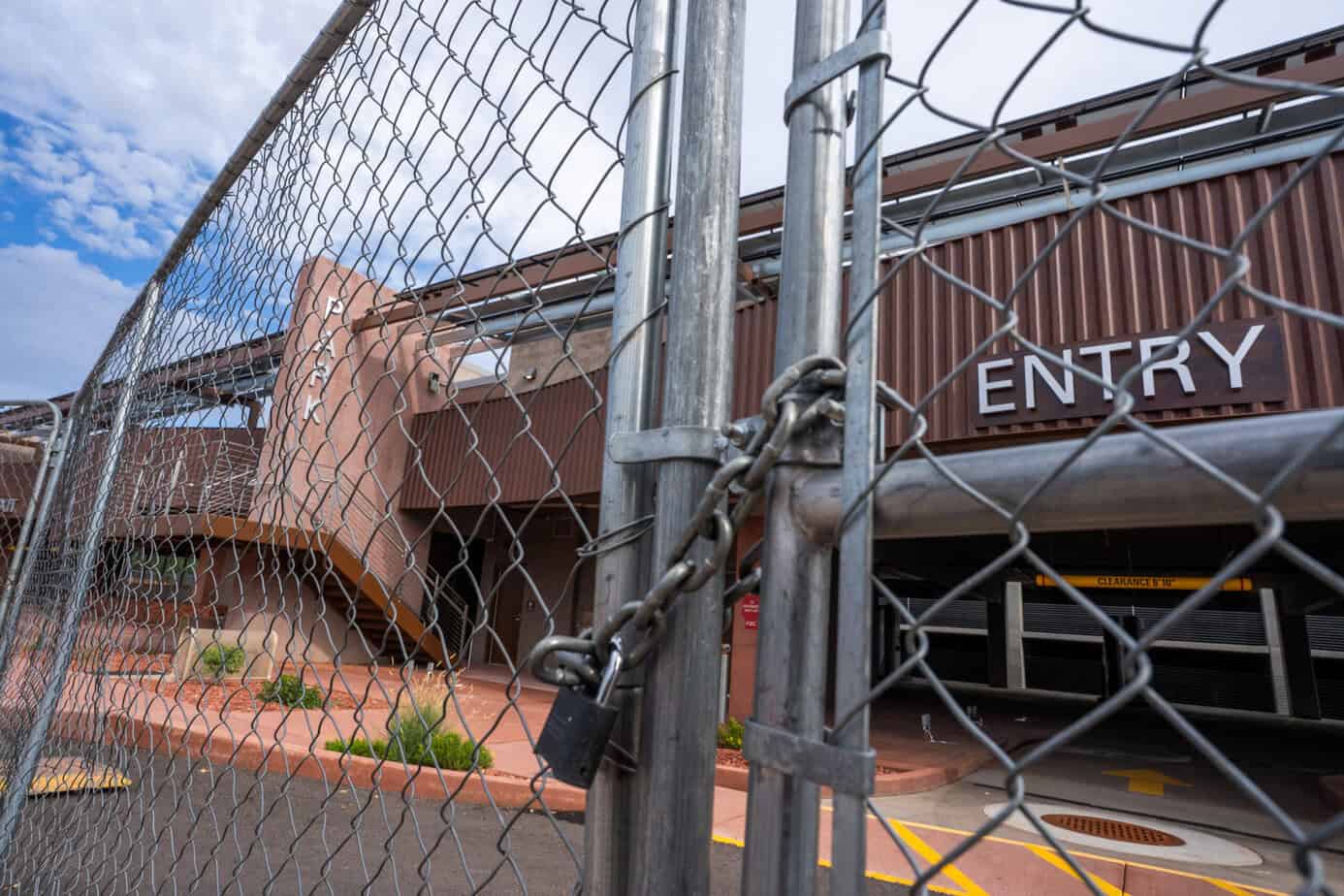
T he Uptown parking garage on Saturday, Jan. 31. The project is about 70% complete, and anticipated to open in June. David Jolkovski/Larson Newspapers

Sedona City Council heard an update Jan. 27 on the $26.4 million Uptown Parking Garage, which will add about 270 new public parking spaces. The project is about 70% complete, and anticipated to open in June.

Much of the discus­sion centered around the use of license plate reader technologies in the parking system and an effort by council to not have a replay of the summer’s controversy surrounding last year’s Flock Safety license plate readers, which were briefly installed, then removed.

“If we are going to use plate readers on any sort of street parking we need to be very clear on how the steps can be set up so it’s not just picking up anybody who happens to drive by,” Councilman Derek Pfaff said. “I don’t want this in any way, shape or form, to resemble the Flock situation.”

Transit Administrator Amber Wagner said her Transit Department staff is planning to use automatic license plate readers for parking enforcement at “the Uptown Parking Garage and other city managed parking facilities where appropriate,” the draft Parking Data Governance Policy and Standard Operating Procedures for the Sedona Parking Management Program wrote. Additionally “hand­held or vehicle-mounted LPRs may be used by parking enforcement staff … for on-street parking and city managed lots,” the document reads.

Parking enforcement will be done by the Sedona Police Department, most likely by non-sworn Community Service officers.

“This is a different situ­ation than having [ALPRs] out on streets where people are just driving through, [because] these are parking lots,” and drivers pay to enter them, Councilman Pete Furman said. “So, I’m OK right now with the direction that” staff has.

“This system is not a law-enforcement tool, does not connect to any police or national ALPR networks, and may not be used for investigative, surveillance or immigration-enforce­ment purposes,” the draft version of the parking data policy reads.

Residential Parking

Council also received updates on the Uptown Residential Parking Program, with Wagner outlining plans for a free, license-plate-based permit system for residents on Smith, Wilson, Van Deren and Price streets, where on-street enforcement is planned. Implementation of the residential program is tied to the opening of garage.

Cameras may be used at the Uptown Parking Garage to document vehicles entering and exiting; council had an early discussion on the data governance, with the data currently slated to be saved for 30 days.

“In regards to citations and appeals, it takes about 20 days to have access to the cita­tion data that is issued for appeals with that program,” Wagner said.

Deputy City Manager Andy Dickey said that staff is working to get “the data retention period down as much as we can,” but did not say a lower limit.

Councilwoman Melissa Dunn wanted assurances that facial recognition won’t be done with the garage cameras.

Wagner said she thinks a majority of the RFPs would only capture a vehicles back license plates “so facial recognition would not even be a consideration.”

While the draft states “the vendor is prohib­ited from releasing data directly to any third party,” Interim Mayor Holli Ploog noted that similar language did not “seem to work with [Flock].”

“At least one of the members on the resident side is somebody who is heavily involved in the [Flock issue] and he is now a member of this work group,” Ploog said — Parking Work Group member and civil rights lawyer Mikkel Jordahl — which Vice Mayor Brian Fultz later confirmed. “So I think we can be assured that concerns about the cameras are going to be addressed and brought up, and that this is not an attempt to repeat the Flock camera fiasco.”

Made up of city officials, staff, residents and business leaders, the Parking Work Group advises on Uptown parking and related programs.

Jordahl “did look at it, and did provide his support, and he did share it with other members of the group that he worked with previously, and we have not received any notification other than from the Parking Work Group member that he does support it,” Wagner said, adding that he shared concerns about third parties accessing license plate data.

The data collected from the cameras in parking lots would also be stored on a cloud server, which could be a point of vulnerability, Wagner said.

“The consistent finding is that the Uptown challenges relate to peak demand, circulation, employee parking and neighborhood spill­over, not simply a lack of spaces,” Wagner said, outlining five focus areas for Uptown parking: Parking management and guidance; residential permit parking readiness; balancing parking supply and demand; employee parking; and a parking fee structure.

Wagner plans to pilot some programs in Uptown as early as March, ahead of the garage’s opening, she said.

Since 2023, “several changes have reduced public parking supply,” the council packet reads. “Lot 1 — Jordan Road — was permanently removed from the public inven­tory following its sale to the Sedona Fire District [resulting in the loss of] 70 spaces; Lot 8 was removed from the leased public parking program due to a pending property sale [resulting in the loss of] 23 spaces; and on-street paid parking was reduced by four spaces. Collectively, these changes have reduced public parking supply by approxi­mately 97 spaces.”

The city calculates the effective available parking supply at approximately 749 spaces when accounting for turnover rates and other real-world factors, down from the total physical inventory of 881 spaces. Effectively, Uptown has a parking deficit of about 110 spaces during its peak demand.

“When operational, the 2026 parking system is projected to include approximately 1,150 public spaces, resulting in an effec­tive supply of approximately 980 spaces, compared to an estimated peak-period demand of approximately 860 spaces, thereby substantially offsetting the current deficit and stabilizing parking conditions during peak periods,” the packet reads.

A $95,800 contract amendment with Quality Testing, LLC, was unanimously approved by council as a consent item, for inspection and quality assurance for the garage. Council previously approved a $182,973.50 contract with Quality Testing on Feb. 25.

“We’ll continue to refine this, because none of this is baked yet. It’s not even in the oven,” Ploog said. “It’s in the pan … and that’s why I’m encouraging anybody who is concerned to contact the members of the group, to come to the meetings and observe the group, contact you and to provide their input, because we are accepting all input.”

Home Rule up for renewal in Sedona in 2026

Pete Furman · February 3, 2026 ·

Home Rule up for renewal in Sedona in 2026 – Sedona Red Rock News

Photo illustration courtesy city of Sedona.

The Sedona City Council unani­mously approved a resolution during its meeting Tuesday, Jan. 27, calling for the 2026 election of three council seats with four-year terms and for the selection of the city’s successor to interim Mayor Holli Ploog.

As part of the agenda item, the council also approved “a potential proposal to extend the Alternative Expenditure Limitation/Home Rule,” and a $650 advertising budget related to the election.

Election Dates

The municipal election will coin­cide with the state Primary Election, currently scheduled for either Tuesday, July 28, or Tuesday, Aug. 4. While the primary is set for August, the legisla­ture may move it to the last Tuesday in July to ensure compliance with the Electoral Count Reform Act of 2022.

State election officials worry a recount could cause them to miss federal deadlines for submitting elec­tion results. Arizona also moved its primary in 2024 for the same reason.

If the Primary Election is held in August, the last day for City Council candidates to file their nomination petitions is Monday, April, 6 with the office of the Sedona City Clerk, and the voter registration deadline is the last day for voters to register is Monday, July 6.

In the event of a July Primary Election, the last day for City Council candidates to file their nomination petitions is Friday, March 20, and the voter registration deadline is Monday, June 29.

If a runoff election is required, it will take place during the General Election on Tuesday, Nov. 5, which has a voter registration deadline on Monday, Oct. 5.

Candidates Thus Far

William Grosz, Henry Silbiger and Vice Mayor Brian Fultz have filed state­ments of interest to run for mayor. Ploog is not seeking the position and will return to her role as a regular council­woman once a new mayor is elected.

Three council seats are also up for grabs: Councilwoman Melissa Dunn’s seat, who is seeking reelection; Fultz’s seat; and Councilman Pete Furman’s seat, who is not running. Lita Loesch Boyd and Jean-Christophe Buillet have filed statements of interest for City Council so far. Sedona residents inter­ested in running for City Council can contact City Clerk JoAnne Cook at (928) 282-3113 or jcook@sedo­naaz.gov.

Council Pay

Currently, the monthly compensation is $800 for the mayor and $550 for council members. That could change following the council’s December Priority Retreat, when Furman requested the creation of a citizens’ committee to investigate and make a recommendation on potentially increasing council compensation to encourage more candidates from diverse socioeconomic backgrounds. Any raise, however, would not take effect until after the November election.

During the meeting also unanimously approved the City Council Compensation Review Work Group and a City Council Audit Subcommittee following a request to pull it from the consent agenda from one resident who spoke against the item.

The work group will meet at least three times and will be made up of six members who will be appointed by council along with one member of council, and has until the end of 2026 to make a recommendation. Furman said the work group does not currently have a recruitment timeline.

Audit Subcommittee

Council approved the creation of an Audit Subcommittee to advise on financial audits and the performance of the city government, a move requested by Furman at the December retreat. The subcommittee will meet quarterly or as needed and be made up of Dunn, Furman, Fultz, a chairperson will be selected from the trio.

Home Rule

Nearly $80 million in allowed city spending is on the line this year as Sedona voters decide whether to renew the city’s Home Rule, the measure that sets how much of its money the city can spend.

There are three options for a municipality in Arizona to set how much it can spend:

■ The state limit that is based on the 1980 budget and 1978 population, adjusted annually for inflation and population growth

■ A permanent base adjustment that, through voter approval, increases the 1980 base to a new base, and only requires an elec­tion when that limit is raised. Mesa used the second one and it is estimated to need its next election in 30 years.

■ The final is Home Rule that Sedona has used since 1996 that replaces the state limit with the city’s annual adopted budget and requires regular voter approval.

The Fiscal Year 2025-26 State Expenditure Limit for Sedona is $15,411,542, with $8,239,380 in city exemp­tions such as grant funding, creating $23,650,922 of allowable expenditures under the State Limit.

However, with Home Rule, Sedona’s FY 2025- 26 Adopted Budget is $103,497,496, allowing the city to spend nearly $80 million over the state expen­diture limit.

If Home Rule fails, taxes would still be collected at the same rate but the city could not spend beyond the state limit. The city has the option to float a one-time override vote to adjust the spending limit.

“The reality is, we still collect [the revenue], even if the expenditure limit were to drop down to the $15.4 [million]. We would still collect all of the … revenue, and it would just sit in the bank and we could invest it, but we could not spend it,” Deputy City Manager Barbara Whitehorn said during the retreat.

Dunn told the NEWS that among the reasons she supports continuing Home Rule is that, without it, she thinks the city can’t access or control funds effectively and representative and decision-making is limited.

“I believe that Home Rule is important,” Dunn said. “Because without Home Rule … you could run into the fact that we [wouldn’t] have a police department anymore. Maybe we’ll have to be like the Village of Oak Creek and use the [Yavapai County Sheriff’s Office]. … Maintenance might be minimal, and certainly no new facilities. So a lot of things that we as residents sort of rely on and count on, there just wouldn’t be any funding for.”

“Historically, Home Rule has proven popular with the residents of Sedona as the preferred budgeting approval model for how the city plans its annual activities,” Fultz said. “I do support Home Rule, because I do think it is both efficient and it creates stability and plan for year to year, project [and] plans that need to have that clear visibility to having budget support in order to be completed.”

Public hearings on Home Rule are scheduled for Tuesday, March 10, at 4:30 p.m. during the regu­larly scheduled Sedona City Council Meeting and Tuesday, March 24, at 3:30 p.m. as a special meeting.

The city of Sedona also anticipates that it will update its Frequently Asked Questions about Home Rule on sedonaaz.gov sometime next week.

  • Go to page 1
  • Go to page 2
  • Go to page 3
  • Interim pages omitted …
  • Go to page 34
  • Go to Next Page »

FISCAL RESPONSIBILITY • HONESTY • OPEN GOVERNMENT

  • Email
  • Facebook
  • Instagram
  • LinkedIn
  • YouTube

Sedona City Councilmember Pete Furman

Copyright © 2026 | Paid for by Pete Furman | Website by Pivot Strategies, Inc.

  • Home
  • About Pete
  • In the News
  • City Meetings
  • Contact Pete